
Episode 184: Get Used To Being Uncomfortable With Derek Distin

Ever wonder how stepping out of your comfort zone can completely transform your career and personal life? Join Amy Vetter for an inspiring conversation with Derek Distin, VP of Community at Rightworks, as he reflects on his unique journey from a childhood of frequent moves to building supportive professional networks in the accounting industry. Through stories about his career pivots—from computer science and Spanish to hospitality and sales—and his experiences as a coach, Derek explores the essential power of leadership, resilience, and maintaining healthy personal habits. This episode offers actionable wisdom on embracing being "uncomfortable" and learning to show up for others, making it a must-listen for anyone looking to navigate professional transitions and fosteexcited to have my frienr authentic, lasting community connections.
---
Watch the episode here
Listen to the podcast here
Get Used To Being Uncomfortable With Derek Distin
Welcome to this episode of Breaking Beliefs, where I interviewed Derek Distin. He’s the VP of Community Engagement at Rightworks. Through his twenty plus years of leadership in sales, success, and customer service, Derek has developed a passion for leadership, coaching, and process improvement. He’s a former collegiate, multi-sport athlete and fueled by a deep desire to build talent and equip teams to succeed.
He joined Rightworks as a client success manager before moving to leadership. He is a devoted husband and father of three. He enjoys singing off-key karaoke and jigsaw puzzles. He has coached the Taylor Road Middle School cross-country program through seven consecutive state titles. During my interview with Derek, he shared stories about growing up in various cities due to his father’s job in orthopedic sales.
The impact of these frequent moves on his family, and how sports and athletics helped him build connections and resilience. He also discussed his journey from college, where he majored in Computer Science and Spanish, and worked in hospitality once he graduated in New Zealand, and eventually joining a company that later merged to become Rightworks. We discussed his current role as Vice President of Community, and what he loves about it is focusing on building a supportive professional network for accounting professionals.
Our conversation covered his experiences as a coach, the importance of leadership and community, and the lessons he’s learned from sports and life transitions. You’re going to love this interview with Derek. I know I did. It’s so insightful when we’re thinking about how to connect from a human perspective when we’re in this age of AI. Stay tuned as Derek shares his story.
---
Welcome to the show. I am excited to have my friend Derek Distin. Derek, you want to start off just giving a little background on yourself?
Building Independent Communities And Finding Your Voice
First of all, I’m super excited to be here. Thank you so much. I have listened to the podcast a number of times. Never quite envisioned myself maybe sitting on this side. It’s a little bit of fun to be here. My name is Derek Diston. As you mentioned, I work at Rightworks. I’m the Vice President of Community, which means that my role with the organization is to help build our community. That is, if you want to call it a product side of things, the actual platform where we have the Rightworks community. Amy, you are a contributor to our community as well. As well as the philosophical community.
Where we’re working with other professionals, other organizations, other vendors, and other software creators. As well as thought leaders across the space to try and create what our goal is to have the single largest independent community in the profession because we are software agnostic. We are practice agnostic. Our goal at the end of the day is to help accounting professionals find that place where they can find the voices that are speaking to them where they are in their professional lives. On a daily basis, I get to wake up and talk to people and try to help solve problems, if not raise a few problems of my own.

Professional Community: Our goal at the end of the day is to help accounting professionals find that place where they can find the voices that are speaking to them where they are in their professional lives right now.
It sounds like a perfect job. That’s exciting. What we love to do is start from the beginning to understand how you got to be where you are now. Where’d you grow up? What did your parents do for a living?
That is such a fun question. I am a cheddar head. I’m a cheese head. I was born in Wisconsin, but I did not spend most of my life in Wisconsin. My father was in the orthopedics industry, on the orthopedic sales side. When you think about somebody saying, “I have to have my knee replaced or my hip replaced,” that was his profession, selling that. In the ‘80s and ‘90s, when I was growing up, that was a period of a lot of mergers and acquisitions.
It’s similar to what we see in the accounting profession now. We moved around a lot. I spent years in Southern California in the greater Chicago area. Outside of Milwaukee, where I was born, and Denver. I loved it. I loved the Mountain West. I finished my high school career in Northwestern Iowa in a small town called Spirit Lake Okoboji. I went to college then in Northeastern Iowa because I had this crazy goal of trying to play three sports. I knew I couldn’t do it at the big school level, so I went to a Division III school.
I was able to do two of the three sports. I played football and baseball all the way through college and then I moved overseas for a couple of years. I lived in New Zealand, because why not? You’re 22 or 23 years old. The world is your oyster. I decided to move overseas for a few years. Before moving back home to Madison, Wisconsin, I met my wife. We started our family, and had three beautiful children. In 2016, we moved to Atlanta, which is where I found work with a small company called Xcentric, which is one of the two founding companies that merged to create Rightworks.
Let’s go backwards. Your dad’s in orthopedic sales. These cities that you’re talking about moving to are very different.
I had very large cities and very small cities.
You moved to Southern California first. Is that right?
Yes.
How old were you?
I had finished kindergarten when we made that move. Maybe seven years old.
How long were you there?
We did two stints in Southern California, a grand total of about four and a half years with a six-month period where we were in the greater Chicago area before winding up right back in Southern California.
How did that happen?
Job happened to have an opportunity that came up and then we made the move. Literally, as I mentioned before, mergers and acquisitions. We were right back in Southern California very shortly thereafter.
I was talking about how nice it is now that you don’t have to move for jobs. At that time, it was so different that there wasn’t this thing where you were remote. Upheaving a whole family, especially that often, had to be hard on the family.
Growing Up On The Move: Finding Resilience Through Frequent Transitions
It was. I’ve said this was both a blessing and a curse. My best friends growing up were my brother and sister. I’m the oldest of three because they were the only constants that I had in my life. Friends to me were something that would be taken from you in about 2 to 3 years. I struggled to learn to make lasting friendships. It was hard. The flip side is learning resilience. You learn how to move into a new area and get to know people pretty well.
What was that process for you? You start creating a habit within yourself like how you disengage from a city and then how do you get to know people. How do you get acclimated?
I wish I had the answer for this that is perfect for everyone because then I’d write a book about it. Perhaps, we’d be sitting on a different show. For me, it came down to reliance on the things that were constant, as I mentioned before, my parents, my brother and sister. That was always there every single day for me. My father worked and my mom was able to stay home and help raise the three of us.
We saw my dad almost every single morning and night unless there was some work thing that was late. I learned to root myself in the things that were constant and then to disengage from an area during a move. I don’t know that I ever perfected that. It was always difficult. There’s always that period of time. You move to a new location. You are the new kid at school constantly. I was fortunate? I was extremely athletic and was able to rely on sports as a way to meet people.
Also, good enough that almost everywhere I went, I was almost immediately the best player on the team whatever the sport was. Good, bad or otherwise, that also creates a, “That’s the kid. We need to talk to him,” or people would want to get to know me a little bit or something. Again, I don’t know that it was necessarily a positive thing. I don’t know that it was a negative thing, but those were the anchors for me.
Those were the ways that I then engaged. If I drew a Venn diagram of friends growing up, the closest, earliest friends in every new location were always teammates of whatever sport was going on. It would broaden out school friends, or neighbors from there. I wish that there was a simple solution for all of this but there isn’t.
What drove you to be the best? Was it a natural ability or did you have much time alone that you could do drills so you were ready for the next place or something else?
Part of it’s natural. Again, it happens to be blessed athletically, to put it bluntly. Part of it was, that was a root for me. That was a rock. I needed to have that. I needed to always find a way to perform well enough that in a new situation, somebody would reach out or want to talk to the new kid. I did spend a lot of time, especially in Southern California, where the weather is beautiful all the time. Outdoors a lot.
I was one of those ‘80s kids where you laugh at these memes that go around where they say, “I was outside all day from sun up to sundown.” It was like, very frequently, we were way past sundown. We were playing under the lights in the street, continuing to play wiffle ball or tackle football on the pavement. Whatever it was.
Was there ever a time that you had to struggle to be the best?
Always. I coach middle school cross country now, and I’m sure we can talk about that later but I’ve told this story before. You can be good at many things, but it’s very hard to be the best at everything. There were times where I would move to an area and I’ll use baseball as an example. I was fast. I had a good arm. I could throw hard and throw far, but I was never a great hitter. That was something that it gnawed at me a lot. I had to learn to hone in on that.
When you think about this from the perspective of replacing hitting a baseball with anything else in life, you have to learn what your weaknesses are. You have to learn what to do. In baseball, I struggled to hit the fastball. I never struggled with some of the off-speed pitches. Some of the things that don’t come in at 85 or 90 miles an hour. I struggled with the fastball.
I had to learn to just anticipate and try to get myself into a position to swing the bat a little bit sooner. Change my stance, change my preparation before the pitch. Learning those types of skills or lessons is not that in my job now. I have to worry about whether my hands are down on my waist or up my shoulders, but the skill to learn to change what you’re doing in order to address a weakness sticks with you.
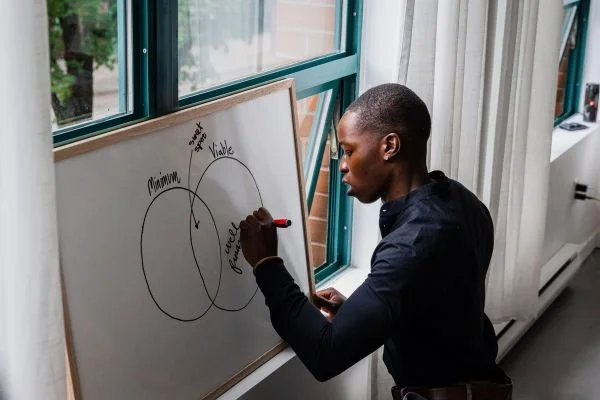
Professional Community: The skill to learn to change what you're doing in order to address a weakness sticks with you.
It’s also letting go of the ego, like being open to what you’re not as good at. Either you fill the gap with somebody else, or if it’s something you can improve yourself, that you improve it. If you’re never open to giving that feedback to yourself or for someone else, it doesn’t happen.
I’m talking about high school baseball here. I was never going to be the kid who was going to hit 7 or 8 home runs in a summer. I was lucky if I could knock 1 or 2 into the fence each year. I knew then my job was to try to make sure that every time I was at bat, I was doing everything I could to keep the inning going for the 2 or 3 batters behind me. They are much better home run hitters than I was and let go of the ego. I have two home runs in my career. I can remember both of them because they’re the only two I ever hit. That’s okay because my job was not to hit home runs.
It’s such an important lesson about being a team player because you don’t get the credit for those runs, but it was critical for the runs to happen.
Nobody could be up to bat if I struck out.
You have to be okay with things like, “I contributed to that, but I don’t need to have the credit for it,” which is a huge leadership lesson in any business. You’ve got to be able to allow other people to shine and empower them to do the things that they need to do.
There’s a very important lesson within all of that. It’s exactly what you said about leadership and being the person to shine or not shine. If you are in a position of leadership and your goal is for your name to be mentioned first, you’re not in it for the right reasons. A leader should be trying to build up the people around them. Years ago, I took an executive level course through Cornell University. This is during the pandemic.
Creating A Team Of Leaders: Sports Lessons Applied To Business
One of the things that they had us do was we had to craft our own leadership mission statement. I can remember mine. It says, “I will lead in such a way as to create a team of leaders. Not a pack of followers.” That lesson or learning of, if the people who I am responsible for succeed, I am a successful leader. If my middle school runners succeed and do well in a race, I am a successful coach. I don’t need them to say, “Taylor Road coached by Derek Distin.” I need them to say, “Taylor Road, here are the kids who did awesome.”
It’s such an important lesson and to see where you shine in whatever situation that you’re in and what that does, going back to that example of trying to make friends. If you had been a different player on the field, and weren’t helping. It’s like playing poker when you play the wrong hand and people know you play the wrong hand. That screwed up the cards for everyone else. People would not have liked you if you weren’t helping them be able to achieve as well.
That follows you everywhere. The old Maya Angelou saying is something about, “People won’t remember what you did or what you said, but they’ll remember how you made them feel.” It’s the same thing. It’s hard to overcome those impressions. If somebody looks at you as a me first type person and you’re going to drop them the minute that it benefits you, then you’re not going to earn their trust. If you had their trust, you’re going to lose it real quickly. Life is hard. It’s harder when you don’t have people’s trust.
How did your siblings deal with that? You were the older one, and I’m the older child, so I understand that responsibility of keeping your other siblings happy. How did they deal with it compared to you? What did you observe?
My sister, who is two years younger than I am, was probably both cut from the same cloth. Very similar, athletically very talented, academically very good in school, and always was able to go with the flow to fit in. My brother who is two years younger than she is and four and a half years younger than I am, was perhaps the best athlete out of all three of us. By that point, he may have been impacted a little bit differently by all the moves compared to my sister and I.
He cared less about it, I call it like the school stuff. He cared less about having a job. Not that you have a job at 14 or 15 years old, but he didn’t care about those things. He cared about the social aspect of things. Again, I don’t want to psychoanalyze my childhood or my siblings’ childhoods but he dealt with it in a way that he needed to lean in hard towards making friends. To this day, he’s probably the most socially adept out of the three of us. I look back at all that stuff growing up and we all had different experiences and came out of it slightly differently. It was tough.
It’s an interesting approach because I have interviewed other people that moved a lot. Your approach is the first time I’ve heard of something like, “I’m going to be good at something so people come toward me.” Where other people have said they’ve had to observe and figure out. It sounds like your brother might have been more like that, where he was trying to gain their interest in him, not based on what he does, but who he is.
There may be some truth to that. Again, I’d have to sit down and ask him. We’ve talked about it as adults, but I don’t know that we’ve dug that deeply into it.
What did you picture having moved to all these different places? On one hand, it does give you a pretty good perspective of different ways to live, different ways communities are, if it’s a big city or a small city. What did you tend toward? What did you see your future as when you were younger?
Again, growing up, sports were so important to me. I was always thinking to myself, “I’m going to go play Major League Baseball or I’m going to make it to the NFL.” I struggled and to an extent still struggle with, call it long-term planning and strategizing. My life is a mixture of just clips and phrases, or something, like the Jimmy Buffett song. I learned to roll with the flow and that also means I didn’t do a ton of planning.
When my wife and I were looking at moving from Madison down to Atlanta, she had said to me, “I’ve got a couple places I’d like to move to. What about you?” I looked at her, I’m like, “Sweetheart, I’ve been all over the world. I’ve been on the other side of the world. I’ve been all over this country, Mountain West, West Coast, East Coast. I don’t care. You pick the spot. I will be happy anywhere.” I am. I’m generally content wherever I am, but as far as a long-term plan, I had a vision for myself.
I knew I wanted to be a father. I knew I wanted to have a wife that I adored. I knew I wanted to, at some point, do coaching in some way, shape or form. I’ve got those things. The rest of the pieces, they just happen. They fall into place or if it’s something that doesn’t feel like it’s right, I find a way to make it right.
I always think it’s interesting looking back at your thoughts when you were younger. I was thinking of things you manifest and not realize you’re manifesting. For myself, I always imagined one day I would live on the water. Now I’m an empty nester living in Florida on the water. The other thing was I remember in college as I was going through accounting.
I was in my step aerobics class having so much fun, and I’m like, “Why can’t I just be a step aerobics teacher? I don’t want to be an accountant.” Now, I’m a yoga teacher. I’ve been able to bring it into what I do. You don’t realize those things that are thoughts you keep gravitating toward, and somehow it comes into the mix. It may not be your main thing, but you find a way.
The coaching for me is a perfect example of that. Again, I played five sports. I lettered in five sports in high school, football, baseball, basketball, track and golf.
That’s a lot. I wonder if kids could do that now, the way sports go.
A totally different world now, but I have coached now. All of those sports that I played, the only one that I have coached were the two years that my son tried baseball. I have had to learn other sports. I became a soccer coach when my middle was growing up. She played soccer for about 4 or 5 years. Volleyball, swimming, and now cross country. All sports that I never participated in myself and never knew anything about. You’re right, I manifested coaching. It just wasn’t in the sports or the fields that I expected it to be in.
Would you still coach those sports without your kids being in it or would you find a different thing to coach?
That’s an excellent question. I don’t think that I would go back to coaching any of the classic sports that I played except maybe football, but that would be more on a specific thing. I could come in and maybe help coach quarterbacks. That’s the position that I played. I have fallen in love with distance running now.
I see myself continuing to coach this middle school program that I’m a part of now, even when my son moves out of eighth grade. Part of it’s because of our middle school and our high school, the campus is enjoyable and our middle school is the only one that feeds to the high school. I know the high school cross country coaches very well and we work very well together. I don’t know that I would go back to any of those classic sports.
Isn’t that interesting? What did you major in? What did you decide to do?
Unconventional Career Paths: From Computer Science To Hospitality And Success
Computer Science and Spanish.
Why those two?
Spanish because I had a love of the language and enjoyed learning a foreign language. It helped me learn more about English and structuring my own thoughts, syntax, etc. Plus, I enjoyed being able to have a language that I could speak other than English. I went to college from ‘99 to 2003. Right at the dot-com bubble and right when computers were becoming a thing. Computer Science sounded fun and awesome. It’s like, “Here’s this great thing.” I was about a year and a half into it when I realized I couldn’t stand sitting behind a keyboard and coding all day. I’m more of a people person, but it would have required another year of college for me to then switch at that point and go on.
Honestly, I felt it was a good enough degree that I could probably find some work in that field or the knowledge of computers would be transferable enough for me to find something to do. I became the default IT guy for my friends and family. Even now with what I do with Rightworks. Knowing computer science helped me learn technology and knowing technology helps me better serve the industry, the profession that we serve. It’s fun to talk about geeky stuff every once in a while.
Did you start out in jobs that were more computer science?
Again, Computer Science and Spanish were my two degrees and I immediately moved to New Zealand to run restaurants. It was probably eleven years before I applied what you would call computer science to a job. It was at least five years before I spoke another word of Spanish. I have worked in the hospitality industry for quite some time.
I’ve worked in sales. I followed in my father's footsteps for about ten years after I’d moved home from New Zealand. To this day, most of the Spanish that I have spoken has been when I’ve served on mission trips to Central America or South America. Most of the computer science stuff that I learned is completely obsolete now.
What did you start out with? I know you were with another company that merged as Rightworks. What were you doing?
I started with Xcentric as a client success manager, which is a little bit more than what you would call an account manager. I had a roster of accounting firms who are all clients of Xcentric. I was responsible for about 45 of them. My job was to be that connection point between our company and their business to help understand their goals, what the business practice wanted to do. I never saw my job as, “I’m going to get on the phone with you every two weeks and we’re going to talk about the technology problems you’ve got. If you had issues, I needed to know about them so I could make sure that our support team was working.”
I wanted to know what your goals are for your business. Are you guys looking to grow? Are you in that phase of you’re looking for your next partners? What are you guys trying to do and how can we assist you? How can our technology serve your business needs? I did that for a couple of years, then I made the jump into our technical support team. I took over and was managing our tech support team for a couple of years. Oversaw us grow from about 45 support agents to 74 at the time when I then was tapped on the shoulder and asked, “Can you help lead our what we call the digital customer experience?”
This is like the little chatbot that might pop up in the corner or the info tool tips that you can click on to remind you of something within the product, as well as the story, the customer journey. I’m trying to help flesh all of that out. About two and a half years ago, I had the opportunity to move to my current position with our community. They’ve been four vastly different responsibility roles. Four different people at the end of it who are being delivered a service or product, etc. All in all, it’s all been the same of trying to make sure that we’re making life easier for our customers.
It’s just interesting you end up in a community with your story. It’s another 180 coming back to how do you engage people when you’re not an athlete now. How have you approached it differently at work?
Why Competitors Are Complimenters: Redefining Community Collaboration
It’s interesting that you say that it feels like it’s a 180. I feel like it’s a 360 and I’ve come back home. I look at my job now and I look at my very first role with the company as the Client Success Manager, and even when I was on the technical support team. We were trying to solve technical problems or business practice problems. I see mine as a larger extension of all of that. If we can create a community, I mentioned this earlier, where you can find the people who are speaking to you.
In other words, a lot of times if you see thought leaders, you follow somebody on TikTok or whatever. I’m sure you have followers who love you and adore you and do all the things you preach about, but they might not be practicing yoga. That doesn’t mean that they’re not getting value from that. There is something within them that you aren’t able to fill for them.
They need something else because, whatever it is. If we can help people find that amalgamation of answers for them, they will be better at their practice. They will be better in their role. They will be better, happier humans. All of that filters into your personal life and your professional life. If we can create a large enough community, I hesitate to say to have all of your questions answered because there’s an infinite number of questions.

Professional Community: If we can help people find that amalgamation of answers for them, they will be better at their practice, better in their role, and happier humans.
There’s a resource when you need it.
Correct. That right there tells me that our team has done its job. Again, having you come in and you’ve been with us almost from the start of community with some of the weekly yoga practices and the breathing exercises. I want to make sure that everybody understands that’s completely separate from Amy and I talking now. I’m just using Amy as an example. There are people within our community who we have heard from, who have said to us during the tax season, when I have been the most stressed and I have a ten-minute breathing session that Amy leads. I never knew how much that could make the rest of my day or the rest of my week bearable. If we can do those things, then we’re doing our job right.
In a sense, you’re finding the best athletes at every topic for people to gravitate towards.
I couldn’t lead a breathing session. I certainly can barely touch my toes. I’m not going to do yoga.
That could be AI or whatever the topic is, like a certain product. All these different topics that help. It’s like you’re still taking from what you did and then finding that everywhere.
I don’t have enough arrows in my quiver to solve all the problems that I see in my life alone. I have to work with other people. It’s the same thing with a business and with a team. You have to be open to, and now that I’m thinking about it. This is one of the biggest lessons that I ever learned. I can’t do it all. I cannot physically do it all. Nor should I be doing it all. If I’m trying to do it all, I’m not doing justice for my team. Some of them may want to do it. Some of them may need to learn to do it. If I continuously hold on to it myself, I’m not allowing them to grow. I’m not creating a team of leaders.
It also goes to the fact that for so long in this world, it’s been like, “I don’t want to share information because that’s a competitor or so forth.” No one’s a competitor because it’s all based on who your customers are, your clients, or who’s ever attracted to your personality in the way you do your work. To not feel challenged by that and make colleagues and friends that can help each other.
Who is a competitor today could be a co-worker tomorrow. Mergers and acquisitions aside. We have a term that we like to talk about in the community because I’ll have people ask us, “You’re competing against other communities out there. Thought leader communities or other vendor led communities.” I say, “I don’t like the term competitors. They’re complimenters because none of us have the right answer for everybody in all things. Can I lean on you? Can you lean on me?” If I lean on you and you help me, I better be darn ready to help you when you need to lean on me.
It’s important. Especially being in business for yourself, creating a community is so important. That changed things for me when I started my business a long time ago when I had my accounting practice. The first conference I ever went to and met other business owners that thought like me, that were having the same issues as me. I remember like we just kept talking till late in the night. It was such a relief that I thought I was all alone. I find that so much in these group interactions or group coaching that people feel like they’re alone. People finally open up or are vulnerable and say what’s on their mind then, all of a sudden, they realize, “I’m not alone.”
Do you remember what that first conference was for you?
It was a QuickBooks Conference.
That sticks with you. You could still probably name who the people were and find them on LinkedIn if you needed to.
It was huge. It made a huge difference, then I had friends to see the next time I was going to go to the conference and meet other people. It grew from there. Thank you so much for sharing your story. I like to end with a rapid fire question. You pick a category, family and friends, money, spiritual or health.
Prioritizing Personal Health, Mindset, And Intentional Living
We’ve talked with family and friends a little bit, so I’m not going to go there. I am not an accountant, so I’m not going to go to money. As I mentioned before, I coach cross country. I’ll go with health on this one.
Things are actions I don’t have that I want to have.
I would love to have a pair of normatecs. Those are a sleeve that you roll onto your legs or you put on your legs post-run. They use compression to help you recover.
I’ve never heard of that.
They are not cheap but that is a thing that I would love to have that I don’t currently have.

Professional Community: Every day, my goal is to chase my greatest race. It's not to run my fastest PR, it's not to win any race. It's to chase my greatest race.
That’s interesting. I learned something. Things or actions that I do have that I want to keep as far as my health.
I enjoy running. I am training for my first marathon. I’ll be running a marathon in December 2026. I want to keep this appreciation for running. I won’t say I love running because there are days where I don’t love it. The appreciation for my own personal health to be able to be the age that I am and to look around and say, “I probably am physically in shape as I was in my early to mid-30s.” Definitely that action.
I remember running on the beach once and I ran past a woman wearing a T-shirt that said, “I hate running,” as she was running. I was like, “I get you.” Things are actions I don’t have that I don’t want to have.
Bad habits. Here’s an easy one, and I’ll be fully transparent about this. Several years ago, my wife went through a battle with cancer. During that time period, I got rid of all the alcohol in my house. I have alcoholism that runs through my family genetically. Having worked in the service industry for years and then playing football and rugby, even after I graduated. There’s an element of, “You go to the bar. You hang out with everybody.”
I knew that there was a threat genetically for me to develop a dependence or something on alcohol. I made a very conscious choice to get rid of it. I didn’t want that to be a crutch for me. To this day, I think in the fridge out in the garage, there might be like 2 or 3 beers. We were on vacation a couple of weeks ago down in Florida. I picked up a six pack for the entire week just in case I wanted to sit on the beach. I brought 3 or 4 of from home. That’s the extent of the alcohol that I have around the house. I don’t ever want to go back to a point of that being a threat to me both mentally and physically.
That’s important. Things or actions that I do have that I don’t want that I want to get rid of.
I have a tendency to focus on the things that I don’t have. Everybody can say this, “I look at the things that I don’t have.” I look at them and I feel not, “I’d be complete if I had it.” I feel that I’m a failure for not doing it. Again, I’ll use a running example as a way to illustrate this. I’ve never broken 20 minutes in the 5k.
That, to me, is a number that feels like, “You’re a great runner if you run a Sub20 in a 5K.” I can go out and run thirteen or fourteen miles, no problem and keep a pace of nine minutes. I’ve never broken that. That’s something I have. It’s this belief of these things I want. Make me a failure if I don’t have them. Not complete me, but make me a failure for not having them. That’s something that I would love, despite working on it probably every single day of my life, to get rid of.
It’s good to have awareness of it. I know as I have gotten older with running, my time keeps getting worse and worse. It’s always having the mantra ready to myself like, “You’re still running. You’re still able to do this,” which, I want to be grateful for. It’s one of those things where you have to predict the thought of what you’re going to say to yourself.
Chasing Your Greatest Race: The Power Of Embracing Discomfort
We’ve got our big parent meeting to kick off the season. Whenever this episode airs, it will have already occurred. I was working on our coaching philosophy so that I can hand this out to all the parents. This is a mantra that I have begun to develop to address exactly what you’re talking about. I’m still out there doing it. Every day, my goal is to chase my greatest race. It’s not to run my fastest PR. It’s not to win any race. It’s to chase my greatest race. That can mean different things. A hard course might mean a slower time, but if I feel good when I’m done, that may be the type of thing that I’m chasing right then and there.
The feeling versus the time. Is there anything that we haven’t talked about that you want to make sure we end with or that you reemphasize that’s important for you that the readers walk away with?
It’s the same thing that I say to all of the runners that I coach. You can do hard things. If you want to grow, you should get used to being uncomfortable. Being comfortable means you’re in a zone where you will not push yourself. Therefore, in order to do hard things, get used to being uncomfortable. If you can do that, I promise you just by showing up and trying and being uncomfortable, you are making yourself better and you are doing whatever that hard thing is.

Professional Community: Just by showing up and trying and being uncomfortable, you are making yourself better and you are doing whatever that hard thing is.
Thank you so much for sharing your story. I’m sure our audience is going to enjoy this episode. I appreciate you being on.
I appreciate it. Thank you so much, Amy.
---
Mindful Moments: Key Takeaways On Leadership, Ego, And Growth
Now for my mindful moments with this interview with Derek. I’ve interviewed a few people that have talked about how moving from city to city affected them as adults and the choices they made and how open they were to different choices being made as well. I even think Derek’s perspective is a different perspective on that. Many times, we look at our history and not realize how it shifts our decisions later in life.
As Derek talked about in this interview, he learned as he put it to go with the flow because of moving from city to city and realizing he was going to need to disengage and reengage as he would go into a new community. How he did that was by working to be the best at any sport that he was in so people were attracted to him and wanted to make connections with him and also wanted to be a teammate.
We talked about the importance of being part of a team. Your role as a teammate isn’t always to get the credit. He used that example in baseball, which I thought was so great. That he wasn’t the best hitter on the team. He was still very talented in baseball. It’s important to understand where we are talented and where we have gaps. If we have a gap, how do we utilize our skill to be able to help others that do have the best talent or the best chance of success?
When he used that example of just understanding that he needed to stay at bat so runners could run in. I thought that was such a powerful example of a leadership lesson that sometimes we don’t get the credit for the score on the board or for the win that our department has. We are always better off when the team wins versus an individual. Those individuals that got credit for the score of being able to score the run. They have to understand that they are being supported in order to do it, and they didn’t do it on their own.
This is where we touched on ego, but it is such an important thing. The definition of ego that I’ve talked about in many of my presentations is it’s the root of all unhappiness. We sometimes believe we deserve something or other people should see us a certain way. If we don’t let the ego go to allow people to thrive and to be able to rise above, then the whole team suffers. This is how I see companies suffer as well when leaders are individual contributors rather than coaches.
I’ve been making a big push to move from boss to coach. Being a coach means that you’re not the one playing on the field. That you are lifting everyone up underneath you so that they are empowered to make the plays on the field and to make the scores. You’re not getting credit for that score, but they know that you are there to support them. They feel like they can trust you with their career because of you rooting them on and giving them the skills that they need. They are so important in this world.
Derek had so many examples of change in his background. When we’re going through change, it’s important to understand how we can be successful during change and how we can motivate others to be successful going through change. Not everybody is the same in how they go through change. We need to understand. I call it being a connected leader. How do we nurture people one by one to understand what it is that might be holding them back so that they do feel supported? That they feel like they can trust you and be vulnerable with whatever weaknesses they have so that they figure out with that weakness how to support the team. Rather than just worrying about themselves.
He ended by talking about how important it is to get used to being uncomfortable. That is the crutch of all of this. We have no guarantees in life. We don’t have any guarantee of what tomorrow brings or the next moment brings. What we have to do in these situations is be present, observe how we are reacting to the situations around us, and figure out how to best support ourselves and the people around us to succeed.
When we are in these uncomfortable times of change through AI, consolidations, all different types of business practices that we’re dealing with now. That we can step back, get present, and try to understand where we’re uncomfortable and what is it that I need to learn now from this process, and how can I be better and how can I be better for the people around me. I want to thank Derek for being on and sharing his story. There were so many great stories in this episode that all of you will learn from. I know I did.
I want to say thank you to all of you that read this show and support this show. We had a glitch in the show a couple of weeks ago where it wasn’t showing up and I got comments in of where it was. I appreciate that you are following what we are doing because without your support, we wouldn’t be doing what we do and making sure that we can get these great stories out to you. Thank you for your support. Please make sure to like, subscribe, review, and also let other people know about this show too. That’s how we grow. If you think it would be helpful for you or anyone you know, make sure to share it. Thanks again. Remember that the energy you create for yourself is contagious. Be intentional in how you show up each day.
Important Links
About Derek Distin

Through 20+ years of leadership in sales, success and customer service, Derek has developed a passion for leadership coaching and process improvement. A former collegiate multi-sport athlete, he is fueled by a deep desire to build talent and equip teams to succeed. He joined Rightworks as a client success manager before moving to leadership.
A devoted husband and father of 3, he enjoys singing off-key karaoke and jigsaw puzzles. He has coached the Taylor Road Middle School cross country program through seven consecutive state titles.