
Episode 175: Eradicate Entrepreneurial Poverty With Mike Michalowicz

Entrepreneurial poverty continues to challenge business owners who work tirelessly yet struggle to find true financial stability and fulfillment. Mike Michalowicz, a business author known for Profit First, opens up about his personal and professional journey from growing up in New Jersey to becoming an entrepreneur and writer dedicated to improving the financial well-being of business owners. He shares lessons from building and selling multiple companies, his current work as a business investor, and his mission to help entrepreneurs overcome financial stress through his Profit First methodology and lifelong commitment to eradicating entrepreneurial poverty. His story reminds us that success isn’t just about revenue, but about creating a sustainable, purpose-driven path that frees entrepreneurs from the very struggles they set out to escape.
---
Watch the episode here
Listen to the podcast here
Eradicate Entrepreneurial Poverty With Mike Michalowicz
Welcome to this episode of the show, where I interviewed Mike Michalowicz. Mike is the author of All In, Profit First, The Pumpkin Plan, Clockwork, Fix This Next, Get Different, My Money Bunnies, Surge, and The Toilet Paper Entrepreneur. His highly anticipated personal finance book, The Money Habit, will be released in January 2026. Mike's books have been translated into over 30 different languages, and his bestselling book, Profit First, has sold more than one million copies.
He is the host of the television show, Four Minute Moneymaker, and a former small business columnist for the Wall Street Journal. Mike launched four multi-million dollar companies before his 35th birthday. He was awarded New Jersey's SPA's Young Entrepreneur of the Year when he was just 26. He sold his first company to private equity and a second firm to a Fortune 500 company. He is now an investor and an active partner in multiple companies. During this interview with Mike, we discussed his personal and professional journey from growing up in New Jersey to becoming an entrepreneur and author focused on financial well-being for business owners
Mike shared his experience with various business ventures, including his current work as a business investor and his mission to help entrepreneurs avoid financial struggles through his profit-first methodology. I hope you enjoy this podcast. There are lots of great nuggets that Mike shares. Definitely share this with your colleagues, like the podcast, and subscribe. I appreciate all your support. Let's get into it.
---
Welcome to this episode of the show. I'm here with Mike Michalowicz. Mike, do you want to just give a little intro on yourself before we get started?
I'm Mike Michalowicz.
I need you to say more.
Need I say more? Everyone's like, “That's a weird Polish name.” I'm an author in the business space. I've been an author for fifteen years. My most popular book is called Profit First, and my newest book is called The Money Habit. I really focus on the well-being of, holistically, of entrepreneurship, but am concentrating a lot on their finances, because that seems to be a starting point for many entrepreneurs. By the way, I'm an entrepreneur too, and a business owner myself.
Mike's Early Life: Growing Up In New Jersey And Parental Influences
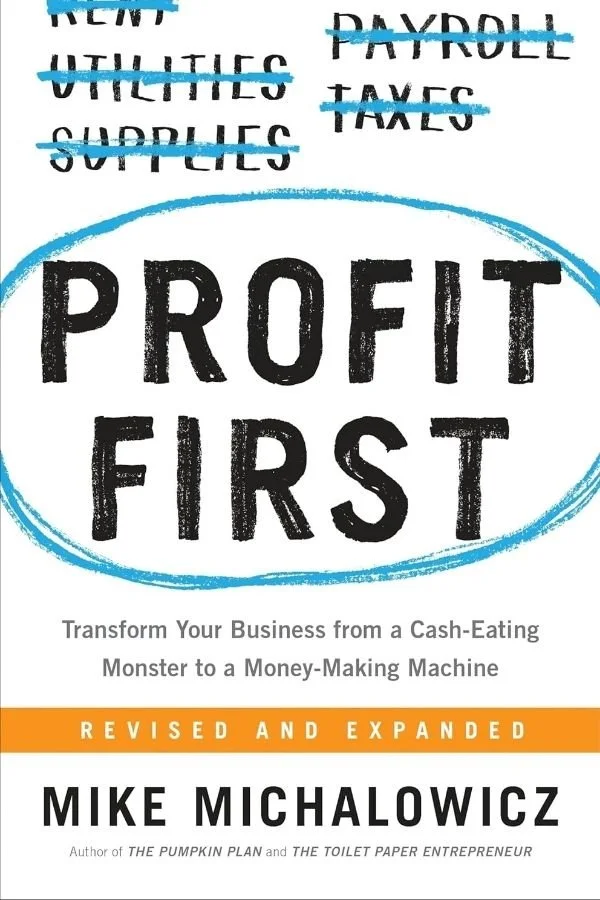
Profit First: Transform Your Business from a Cash-Eating Monster to a Money-Making Machine (Entrepreneurship Simplified)
Great, awesome. I’m happy to have you on. We'll get right into your story. Maybe you can share with the audience where you grew up. What did your parents do for a living?
I'm one of the guys who said I'm never ever coming back home to Boonton, New Jersey, where I grew up. I came home to Boonton, New Jersey. That's where, of course, my father worked for a company. They built oil refineries. Mostly in the US, Texas, stuff, but he traveled all around, but based out of New Jersey. He was an engineer.
My mother worked at a gear manufacturer. I call it a factory, really. They manufacture gears, and she was a customer service rep. Someone would come in and say, “One of the gears isn't working.” She had to get it fixed while keeping the customer happy, but also the service department. She was in that liminal state between keeping everyone happy. She loved doing that.
How involved were you with what your parents did?
Not at all. My parents were much older than my peers' parents. My father passed away, but he would be 97 or 98. He was still alive. My father was in World War II. That gives you context. I'm in my 50s. He was at the very end during the occupation. I never really got involved. The only thing I ever really remember, I didn't really understand what my father did. I didn't really pay much attention to it.
I just knew when I graduated from college, he's like, “Do you want to be an engineer or a mathematician?” Really STEM. He said, “Do you want to get one job with one company for your entire life?” Things have changed. Generations have changed. My mother was a stay-at-home mom until we got into high school, my sister and I. When I was graduating eighth grade, she was off to work for this company, working on gears.
What was it that you enjoyed growing up? What were the activities that you did?
I played sports later on. I played Little League and stuff like that. I'm not an athlete by default, but I remember one girl and the popular girls, like 7th or 8th grade, picking on me. They came to me and they said, “How often do you work out, Mike?” I had cleaner arms. It was so burned into me. I said, “I'm going to be an athlete and hit the weight room.”
It’s because of Sarah McMickle and her friend, if you're listening, even this morning, I was at the gym working out this morning. I am religious about it. I became an athlete. I even played in college. I played lacrosse in college and stuff. That was my core thing. Also, we were talking about prior to this, I picked up the guitars around 13 or 14. Just was I just loved ACDC.
Yeah, me too. Concert this year. It was so good.
I've seen them. The first concert of my life was ACDC. I saw them when I was thirteen. I was never so scared in my life. I was not ready for that. The first song I ever played was Sin City. This is like a back track B-side, and I fell in love with the guitar. I probably could belt out 10 or 15 AC/DC songs off the top of my head. I still play guitar. Mostly acoustic now, but I'll tell you, Back in black on acoustics sounds pretty badass.
I would love to hear it. How did you teach yourself guitar?
I went to an instructor. You were talking about the School of Rock. I remember the guy's name. His name was Bob, and he looked like the quintessential hair metal. He could have played for a Cinderella-type of guy. Hair flowing everywhere, and he had all the rings on and stuff. He's like, “We're going to practice our first song.” Like, “What is it?” He's like, “Mary had a little lamb.” I'm like, “Are you kidding me?” He's like, “No.” I went to this rocker dude, and we went through the book, and it was like, “Memorize the first string, it's an E, F, F sharp, G.”
I was like, “I did it for eight months.” I remember him saying to me once, he's like, “You're not practicing afterwards.” I'm like, “I just don't like music.” I had a buddy in school who was like, “Dude, power chords. All you've got to do is an A power chord, an E power chord, and you're going to sound like a badass. I did it.” I'm like, “Guitar is amazing.” That's how I actually learned, from buddies and just fiddling around, buying whatever songs I want to listen to. You could buy books like Stairway to Heaven: Led Zeppelin. I learned from the book. Now it's all YouTube.
It's so interesting because I had to practice, and I played classical music growing up, and I had to practice an hour a day with a time. It was an egg timer.
Are you a metronome?
No.
Just a timely hour.
I couldn't end a minute early. You got more time added. It took away the fun of it, like you were saying. When I put my kids in School of Rock, I was like, “That looks like fun.” One time, I took them out, and my younger son basically was like, “Not practicing.” I'm like, “Why don't you practice?” He's like, “Without a concert, what's the point?”
That's so funny.
I was like, “You're going back to school.”
I love it. To me, it's become a form of an outlet instead of reading a book or something like that. It's just for me, it's just it's a great way to unwind.
When you were graduating high school, did you follow what your dad told you to be an engineer or what was your craft?
I went to Virginia Tech. Virginia Tech was a technical school for engineers and other STEM-oriented kids. I played lacrosse down there. I went there.
You were an athlete.
I was athletic enough. I wouldn't consider myself. This is the craziest part. I became captain of the team. I hold my own. I was a starter, but I wasn't. There were elite athletes there. I was not that. I'm so grateful for is I learned how to market in college. The lacrosse team got zero PR, and I learned to figure out how to get tons of PR. We were at the newspaper, the school paper, all the time, and stuff. Virginia Tech had like 30,000 students, I don't know, it was big. The team's like, “What are you doing?”
That was part of the reason I think I became captain. Nonetheless, I went to school because it was as far away from my parents as possible. I loved my parents. I just wanted to be independent. I studied business there, and I had no aspirations of being an engineer nor the stamina or intelligence to do that. I studied business as an average-plus student. Maybe it could be great on average in general. I think my dad was happy because I went to an engineering school, so he could say that. I think I was happy because I didn't have to do engineering.
What was your major then? Business?
Yeah. Business finance, ironically or coincidentally, I should say. I learned nothing about finance.
You learned nothing about it.
It was so technical and so confusing. What I teach is the antithesis of what they taught. It's all about behavioral management. Understand your behavioral wiring and you'll be good with money. Don't force yourself into this convoluted, complex logic.
I think that's what scares everyone off as well. If you're not a math person or a numbers person, it seems overwhelming.
Most people aren't. I think we abuse ourselves and say, “I'm not good at math, therefore I'm not good at money.” No. You're good at being you. We just need a system that works with who you are. Channel your behaviors. I actually have a saying in a few of my books, “Don't change who you are, channel who you are. Have a system that's built specifically for you and you'll thrive.”

Entrepreneurial Poverty: Don't change who you are; channel who you are. Have a system built specifically for you, and you'll thrive.
The Journey From Finance Degree To Entrepreneurship: A Computer Store Beginning
I love that. What did you do with your finance degree?
I got a job at a computer store. Isn't that what you're supposed to do? I got a job after college, and so I did get an offer from the government, but I'm not government material. I worked at a place where I interned. It was a computer store. Initially, they had me programming. I actually enjoyed, and still do, programming. They said, “That's programming.” It's also playing the piano really fast.
They said, “He's just playing piano in the air.”
You can present pretty well. We want you to go on a sales appointment. I remember doing my first sales appointment, and I wasn't hooked, but I understood the process, and I was able to make a sale. They said, “Do it again.” I became a salesperson and project manager for this company in the computer systems. That inspired me. It's like, “I'm going to start my own company.” I became an entrepreneur just a couple of years after graduating from college.
What was your first company?
Same thing. Computer networking was called. VAR was the term back in the day. Value Added Reseller. Basically, we installed a network. There was a system called Netware, which was a big program or NOS, which is a Network Operating System. It was a big operating system for networks back in the day, we installed network networks and that ultimately became Windows networks and so forth.
The Genesis Of Profit First And A Mission To Eradicate Poverty
How did you transition into helping entrepreneurs? What happened with that business?
The problem is not going to sound like a problem is I sold it and I made some money. I then started a second business in computer crime investigation and sold it, and made a lot of money. These are problems because I thought I knew everything about entrepreneurship. I start a business, pump it, and dump it. I grow quickly and do certain things. I became arrogant.
What happened then is the collapse. I lost all of it because I'm like, “I'm going to have an angel investor. I'll buy all these, start all these businesses.” I lost everything and lost all the money. I'll never forget the moment I talked about it often, is I came home to my family to tell them we're about to lose our house, which we did because we lost everything financially. I lost everything financially.
Did you invest in the wrong companies?
No, the companies were great. It was me. I was like, Amy, you got a business idea. Here's a hundred grand, but there's something more valuable coming. It's me. I'm to be here, and we're going to grow this like crazy. I was just over the place. You may not even have a business idea. I was just like, “Let's just do something.”
It's all over the place. I was working with college students, and had never run a business before. I started going to other businesses. They weren't complimentary. It was just crazy. Also, I was starting to live a lifestyle now. I'm like, “I deserve a vacation home. I deserve all the cars. I had the expensive cars and all that stuff, and just the money was going away so fast.” I could see the bank account dwindling, but logically couldn't accept it.
Something would happen, then it hit rock bottom. I couldn't pay a tax bill, I couldn't pay debt, and I cannot own my family. My daughter, the short story is, she's nine years old at the time, she grabs her piggy bank, he says, “Daddy, since you cannot pay our bills, I'll pay our bills.” She's now 27, that girl. At that moment, in retrospect, it became the most important moment of my life. I look back and say, “I realize I don't know much about entrepreneurship.” I still don't know that much. I know more than I've ever known.
Perhaps I know more than some other entrepreneurs, or at least different perspectives, but I don't know nearly enough. I am on this relentless thirst quest to understand everything about money, everything about operating a business, everything that triggered me to become an author. I've devoted that happened only fifteen years ago, or maybe more, 17 years ago. I'm just devoted. I believe the rest of my existence on this planet will be trying to eradicate entrepreneurial poverty. I want to show you something. If I can turn this camera, right there, see that sign eradicate entrepreneurial poverty? This is my office in town. I also have an office at home. Everywhere I go, I have that sign that it's so ingrained in me that I have to fix this.
It's such a real thing. I know from being a CPA and working with small businesses, so many people won't even look at their numbers because they're afraid. They've taken money from people, and they don't even want to know what's happening. It doesn't mean it's not happening.
It's human nature. That's what I did. When we had no money, when I had no money, bills would be coming in, and I would just let them stack up. If I didn't open the envelope, my thought was maybe I don't have to face the truth. The office would come in and say a collection notice on its stuff, like that. It was terrifying, but it is a normal response to hide away from it. There's a way to recover.
How Moms Became The Core Community For Profit First
That's what I did for myself. I think one of the most interesting things is, I believe this is true for you, Amy, for me, for everyone listening, that the thing that we feel compelled, held, or called to teach is actually the thing we need to learn. I teach everything I can about entrepreneurship and the journey, and money. Honestly, I think that's really what I need to learn on this planet.
It's true. I know I heard you speak once, and there was something that stuck with me. I think it was your Profit First book where you did it for college students, but the moms. I just thought that because there was a line you used that I couldn't think of it, but it's so true where their spouses were like passive-aggressive. I remember what you said.
It was my very first book. I wrote a book called The Toilet Paper Entrepreneur. It was this edgy, admittedly soft mark, but aggressive. It was my phase of life where I was just angry about entrepreneurship, and also saw that there was a better path. The book went on to be moderately successful. I also thought that the consumer would be me. I looked at myself, just an earlier version of me, and said, “I graduated from college and started a business.”
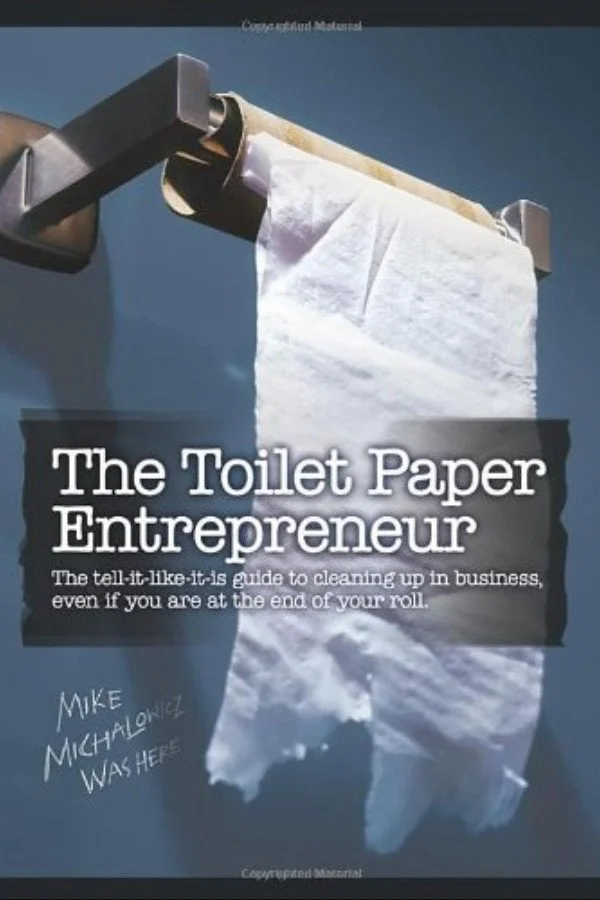
The Toilet Paper Entrepreneur: The tell-it-like-it-is guide to cleaning up in business, even if you are at the end of your roll.
Therefore, I'm looking for white males who graduated from college, looking to start a business. I started going to all these different universities. I got a call from a mom who said, “My son came home and he had purchased a book where you spoke, and he dropped it and he's not reading it.” I picked it up because the title is so crazy. She's like, “This book is speaking to me. I had the same retaliatory I can do this, but the world doesn't believe me mentality.”
Mom after mom, man, five maybe moms over a year period called me. At a certain point, I said, “I didn't write this for college kids. I wrote for moms.” Here's what they told me. When I was speaking to them on the phone and I suddenly started speaking only at women's events. When these children were going to college, the moms were experiencing their first empty nest and were saying, “I want to pursue my life dream of starting that business.”
This is what you're getting to, “My husband is a verbal supporter, but emotional detractor.” Meaning he says, “Go start that boutique or whatever that dream was of yours, but you're screwing us. You're taking my application money. You're ruining us. I have to care.” Not saying those words, but emoting that. What a dysfunctional conflict. These women were saying, “You're the first male figure that doesn't pander to the female audience. You don't say you're better. You're just sharing. It's a hard effing journey.
Here's how you do it. Good luck, but I'm on your side. We need your success.” It started to land with the female market. Someone I never thought I'd be presenting to became my core community. What happens is I spoke with a lot of women entrepreneurs, all these different events. It took about 5 or 6 years, but they carried me on their shoulders to larger and more vast platforms.
I think that verbal supporter, emotional distractor is what you said? It can happen in so many times. It can be your partner in your business. It's that money pressure at the end of the day that becomes this passive-aggressive thing that's happening while you're trying to be positive, optimistic, and try to grow this business. It's like no one talks about that. You were the first person who ever said that. I was like, “That's it.”
Do you know what's so funny, too, is that we as entrepreneurs have this necessary but perverted relationship with our customers, our clients. If I were your doctor and you came in and said, “I'm not feeling well.” I said, “Before we get started with the exam, I want you to know I'm not making any money. I'm really desperate. A business is really struggling, and I need more patience. Come on in. You may get away from me.”
Conversely, if the doctor comes out and she says, “I'm very profitable. I have a very sustainable business. I'm rock solid. Is that someone you want to do business with because they're in the right mental state? We as entrepreneurs, even if we're struggling, have to say, “We are crushing it. We have to move that.” There's this conflict inside of this external confidence, which may be a lie compared to this internal fear, which may be the truth, and they're fighting inside of us, which is a really difficult way to sustain.
Many good points there. Maybe you want to just let the audience know what you do and how your communities work.
A few things. I'm a business investor again, believe it or not, I've gotten back into it, around a thousand times better. I've learned a lot in the process. We're investing in businesses that are currently doing a million dollars in revenue to maybe even fifteen million in revenue, but are struggling. The owner is not profitable. They're overwhelmed. They're stressed out. I know how to fix these businesses, and we go in, we fix them, and then we give the keys back to the owner.
We only share the success while we're fixing them and then return to the business. It's the owner, and that's the dream. If I had to invest in my business, that's what I want. I don't want someone who takes equity. I don't want someone who coaches me and is a talk therapist. I want someone who's in it with me, helps me, and then lets me fly again.
I'm doing that, and we're in about I got to check. We're in twenty companies now. We started off with 1 or 2, and we just added five a month ago. We have a portfolio manager, sounds like a sophisticated term, Greg. He's called and said, “We're bringing on three more companies.” I'm also an author. That's my full-time career. I'm very proud of Profit First in particular, because that built an organization called Profit First Professionals.
Those are accountants like yourself, CPAs, bookkeepers, and coaches who use the profit-first methodology to help businesses become sustainably profitable. I'll tell you the ultimate secret of the investing I'm doing. What we do is we actually hire a Profit First Professional and other experts, too, from my other books. We bring those experts into these businesses, and, surprise, they actually fix the business.
That's awesome. You've created the ecosystem.
It's a bit of an ecosystem.
That's awesome. Thank you so much for being on, and so many great things that I'm sure our audience is going to benefit from.
This has been a joy. Thanks for having me, Amy.
---
Mindful Moments: Key Takeaways And The Importance Of Fun In Work And Life
Now for my mindful moments with this interview with Mike Michalowicz. We talked about his beginnings were in New Jersey, and he claimed he was never going to go back, but he did. Also, his beginnings with sports where he became an athlete because he was told he had small arms by a cute girl at school, and that led him on a path to not only work out but also eventually become an athlete with lacrosse and play at his college as well.
The other thing that Mike and I have in common is our love for music. He started playing guitar at thirteen years old. We talked about his first instructor being very classically trained and him wanting to really understand from the rock point of view and get more excited about music. When he had some friends showing power chords, that changed for him. I think it's just an important lesson.
I grew up the same way with classical music, and I did love playing the violin, but I always wanted to figure out how to make it electric. Now they make electric violins, which is exciting. I have 1 or 2. However, the important part of this is how you make things fun. This goes to our work or our hobbies. I really learned this lesson with my own son when he was little, that I had hated practicing when I was young, and Mike had the same experience, where he wasn't coming and practicing as well.
It's important that we figure out how to put the fun into things that take technical expertise, take the time to learn it, and update it to what our culture is like if we want people to enjoy things. That's whatever we do at work. Whatever we do on the outside is to figure out how to bring the fun into it. I really learned that with my younger son when I tried to take him out of the original School of Rock and put him in more classical training, and he got bored and he wasn't practicing, and I put him right back because he wanted to perform.
That's really the exciting thing when we can see what the output is of all that daily grind and that's the same thing in our work is not only for ourselves to celebrate the win after we've put in that grind, but also for every single person in our organization to understand how they feed into the successes of the business so that their work matters and they know it matters and how it aligns with that. It's really important to think about that in our everyday lives.
The other thing that we talked about was his take on finance and really coming from a behavioral standpoint versus the technical side of it and that mindset of really trying to understand where you are as a business person or an entrepreneur and how you interpret numbers or whether you have fear of it or no fear of it and how do you find the pathway to align with the way that you think, the way that you visualize things and understand things.
It's really important to do that so that we can make sure that we are achieving what we want in finance. We talked about his beginnings of where he really became a salesperson, which led to him owning his first company. Also, talks about where he got this expertise in running businesses and selling businesses. All of us can claim this when we're younger, we think we've got it until we don't have it.
Something bad happens in our lives, and we have to learn from that and do the upward climb again. Those are the times that we learn the most. In our successes, we don't always learn as much as the times we're in the muck. We have to work through it. That was really what led him on this journey to eradicate entrepreneurial poverty, which I love, and being relentless to understand it because it became his passion of not only what he experienced, but not wanting any other entrepreneur to experience it.
How do you teach it in a way to change that mindset? The other thing that I wanted to bring up, too, was what I brought up to him about one of his books, where it ended up that his target audience was mom entrepreneurs. That is a really important thing about customers is that we can think we know who our customers are going to be and who we're targeting. We have to be open to see who is actually interested and wants a piece of what we're doing, and make sure that we pivot and change based on that.
That led him because he was open to shifting and learning that market. It not only led him to help women entrepreneurs. On top of that, it started launching his whole Profit First Professionals community. Now it's utilized, and the investor works that he does. Many great actions that came out of his stories. I hope that you were inspired as well and even pick up one of his many books if you are on the entrepreneurial journey, so that you can learn from his successes and his downfalls as well.
Thank you so much for tuning in to this show. I really appreciate all of your support and the work that we do at The B3 Method Institute. I look forward to our next guest and learning those stories and how those stories will help you. Just remember that your energy is contagious. Be very intentional about how you go back through the day, taking those brief breaks to just step back, observe, and show up the way you intend to.
Important Links
About Mike Michalowicz

Mike Michalowicz (my-CAL-o-wits) is the entrepreneur behind four multi-million-dollar companies and the author of bestselling business books including Profit First, Clockwork, The Pumpkin Plan, and All In. His newest book, The Money Habit, a highly anticipated and groundbreaking approach to personal finance, will be released in January 2026. Television host of 4 Minute Money Maker and a former columnist for The Wall Street Journal, Mike now travels the world helping individuals grow thriving businesses and live richer lives.