
Episode 178: Embracing AI And Taking Steps Toward The Future With Jessica McKellar (Pilot)
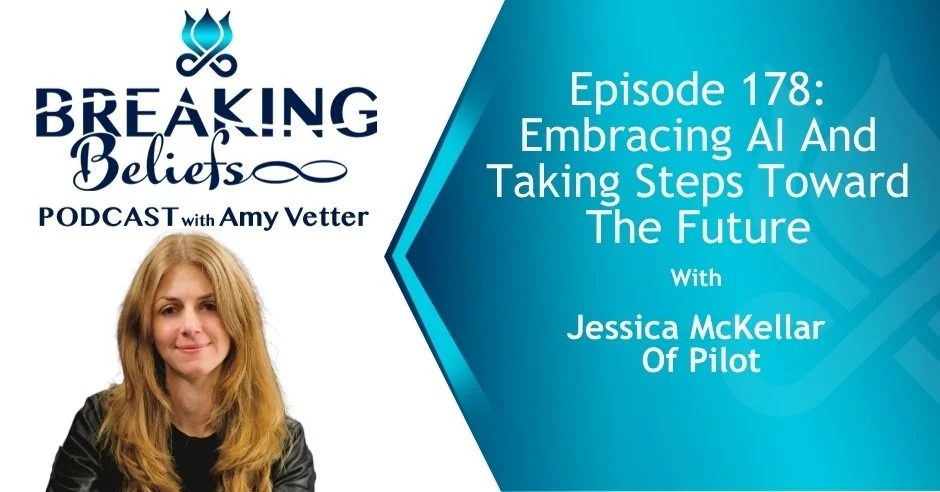
AI has evolved tremendously in just a few years, and it is not going anywhere. We have to learn to live with it and use it to our advantage. Amy Vetter chats with Jessica McKellar, co-founder and CTO of Pilot, a provider of AI-powered bookkeeping and advisory solutions for small-to-midsized businesses and startups. She shares how they leverage AI to automate bookkeeping and help small businesses achieve huge success. They also discuss the future of accounting and finance, the role of automation in transforming the industry, and why professionals need to adapt to these inevitable changes while maintaining their role as trusted financial advisors.
---
Watch the episode here
Listen to the podcast here
Embracing AI And Taking Steps Toward The Future With Jessica McKellar (Pilot)
Welcome to this episode of Breaking Beliefs, where I interviewed Jessica McKellar. She is the Cofounder and CTO of Pilot, a modern accounting firm where 100-plus accountants serve over 3,000 businesses, and it is enabled by Pilot's AI technology. She holds computer science degrees from MIT and previously founded two startups, Ksplice acquired by Oracle and Zulip acquired by Dropbox. Jessica is also an educator teaching Python at San Quentin State Prison and is a vocal advocate for hiring formerly incarcerated engineers.
A recipient of the O'Reilly Open Source Award, she also served as a technical advisor to HBO's Silicon Valley. Jessica is passionate about using technology to empower people and scale meaningful impact. During this conversation, she shared her personal background and career journey. We talked about her upbringing, her parents, her father and her mother, and the impact that they had on her, and her progression from studying chemistry at MIT to becoming a successful entrepreneur in the tech industry.
She also talked about her experience with various startups that led to this company, Pilot, which automates bookkeeping using AI to help small businesses. We explored the future of accounting and finance, discussing how automation and AI tools are transforming the industry. You are not going to want to miss this conversation because Jessica is very real and has the experience to talk about what it means to go into this new world and what the steps are to get there.
This episode was sponsored by Pilot, who is a provider of artificial intelligence-powered bookkeeping and advisory solutions for small to mid-sized businesses and startups. Through the launch of their local partner program, Pilot's AI-powered platform enables independent bookkeepers and accountants nationwide to deliver automated bookkeeping and personal advisory services to clients in addition to connecting local partners with pre-qualified prospects to grow their business and their communities. Learn more about their local partner program at Pilot.com/Local-Partners. I look forward to sharing this conversation I had with Jessica.
---
Welcome to this episode of Breaking Beliefs. I am here with Jessica McKellar from Pilot. Jessica, do you want to give a little introduction about yourself?
Thank you for having me. My name is Jessica. I am a Founder and the CTO of Pilot, where we provide finance and accounting services to small businesses. We do it in a very cool way behind the scenes with a lot of software and AI. Which makes the experience even better, richer, and more useful for you.
Growing Up With A Freedom To Explore
I’m excited to have you on. I’d love to get into your backstory and how you got to be where you are now. Where did you grow up? What did your parents do for a living? Did you have siblings? Give us a little bit of background on your family.
I was born in Fremont, California. A child of the ‘90s in the United States. I am the oldest of three. I have a younger brother who is five years younger than me, and then a younger sister who is ten years younger than me. My mom and dad are amazing. My dad has some health issues now, and he is basically retired, but he was a gigging musician my whole childhood. There was always music in the house, which I deeply appreciated then and only increasingly appreciate as an adult and now an adult with kids.
He would be working at night, and would come home late. For some reason, I have memories of still being up at night, even as a little kid. He would take me out and sit with me in a lawn chair. We would look up at the stars after he got back from work late at night. I also watched a lot of late-night television with him. The amount of David Letterman that I watched as a single-digit kid is maybe unusual. My dad was a gigging musician.
What did he play?
To pay the bills as a musician, especially back then. This is like you are playing in restaurants or weddings. He often would play piano in a duo or a trio for restaurants or for weddings. He also plays guitar. He is a fascinating guy. There is lots we can talk about there. He had a recording studio in Fremont next to MC Hammer's recording studio. There’s lots of interesting stories we could talk about. My mother say is maybe a professional free spirit but in practice, when I was a kid, she had a variety of jobs.
She ran a gelato store, and there were pictures of me. She would be scooping ice cream, and I was in a baby bouncer in the back room. It was kind of a family operation. She was a substitute teacher. She was an administrator at Stanford in the department with the guys who started Yahoo. It’s like a mishmash of experiences. Also, an interesting and amazing person. Those are my parents.
How did they meet? They seem like two very different people.
My dad grew up in Paris, and they met in California. I grew up in the house that my mom grew up in. How did they meet? It is a complicated side story. That is maybe what I would want to say. It is important for my parents and my family when I think about who I am today professionally, it is always their priority for me.
As a little kid, but also in high school and in college. They’re like, "We want you to be happy and fulfilled. Whatever that looks like for you, we are going to support it." There was never any academic pressure. My dad was a musician, and my mom did a variety of things. It meant that I had the opportunity to, but also had to decide for myself what I want to do. How do I want to engage with school?
It was something that was very intrinsically motivated. The path that I chose was all very intrinsically motivated because no one was telling me what to do. They gave me a lot of freedom, too. Maybe too much freedom. We are going to see how I am with my kids. I appreciate it for myself and the kind of kid and teenager that I was.
When you were exploring or dreaming on your own, were you looking at their lives and saying, "I would want to do this or would I want to do that?" Were you starting there, or were you looking elsewhere?
Family friends who have known me for a long time will joke that I was a reaction to my parents' very no-rules family setup. I was very studious. I was very academically motivated. Why? Part of it is probably that my dad was a musician, but a very early adopter of technology applied to music. He was a very early Apple fanboy because they had good MIDI sequencing tools. They had good tools for musicians even back in the early ‘90s.
I had the benefit and privilege of a computer in the house that I had unrestricted access to. We have pictures of me sitting in a diaper with a bottle in one hand and a napkin in the other of an Apple and playing little basic kids' games on it. I had parents who loved me and supported me. I had a lot of access to technology and support when I decided that I liked a bunch of academic stuff. My school journey was interesting. We ended up moving to Nashville when I was in middle school. I went to a performing arts middle school.
Did you play an instrument?
I still do. I play piano. The way that I paid for my car in high school was that I was in a top 40 cover band that played weddings. It was similar to my dad. Fun fact sidebar, this middle school was also where Kesha went to school. Our families are friends, even now because we were California transplants to this Nashville area middle school. This band was with some of the members of what later became Paramore.
Nashville is a funny town for that. There is just talent everywhere. Even though that, the path I chose still ended up being a fairly academic one. Even though I had this music stuff going on in the background that I loved. I thought I was going to be a chemist from reading a bunch of books in the library. I was bused to the high school to take classes because that is where the classes were offered that I wanted to take.
Besides the performing arts school. You went and took classes elsewhere as well?
They bused me to a high school. I was not that cool. I found my footing in high school, but being pretty uncool was formative for me. Figuring out how to navigate people. To tie out this thread, I was very academically interested and motivated. I ended up excelling on that front in high school. I applied to and got into MIT.
I thought I was going to be a chemist. That was my first degree. While pursuing that degree, I had a lot of friends who were in the computer science department. I was watching them out of the corner of my eye, seeing what they were learning. What I observed was that they were learning a toolkit full of tools that could be applied to a broad range of problems in the world.
It felt more general-purpose, honestly. I was learning the history of chemistry. An undergraduate chemistry degree isa tee-up to do a ton more continuing education to then get very specialized, usually. It felt like they were developing this very powerful toolkit full of tools. I decided I wanted to see what that felt like.
I took a couple of computer science classes. I ended up liking it. I ended up getting a CS degree then ended up getting a CS master's. I have been into computers ever since. The chemistry degree, as fun as that was to obtain, has not gotten a ton of use. Although, I do like science experiments with my kids. That is fun. My career has been leveraging that computer science and programming background in a series of startups coming out of school.
Did you continue to play music during this time or did you let it go?
I had a keyboard in my dorm room at school, but I did not have a ton of time for it. What has gotten me back into it the most, honestly, is having kids. They love music. We have tons of instruments in the house. They like noodling on the instruments. We’ll all play the piano and do sing-alongs together. My son pretends that everything is some brass or woodwind instrument. He will pick up a toy car and pretend that he is playing the trumpet. Everything is an instrument.
He has got it in his bones.
I think so. There has been a big uptick in music in the house because the kids like it so much.
Starting A Start-Up Business Out Of School
You said you got out of school and started in a startup or did you start at a company?
I have had the great honor and pleasure of working with my cofounder, Waseem, for our entire professional careers. We met as computer nerds at MIT. We were in the computer club together, which is where the nerdiest of the nerds hang out. The first thing that we did out of school was to productizing a research project and turn it into a company. It was a bootstrapped, self-funded company.
It was a technology for reboot list kernel updates on Linux. If you imagine having a computer and you get that pop-up that is like, "You need to install some updates and reboot." You're like, "That's a real drag," but you do it gradually. That is a bummer as an individual, but if you're a company that has lots of computers, like you are a hosting company or you are a supercomputing cluster.
No one wants to be the person who says the supercomputing cluster is down for maintenance. We had a technology that allowed you to apply those updates without having to reboot. It’s like a deep tech that we turned into a subscription product that we sold. We built it into a profitable business. There were two other cofounders at the time. We built it into a profitable business that was acquired by Oracle.
AI: No one wants to be the person who says the supercomputing cluster is down for maintenance. We had a technology that allowed you to apply those updates without having to reboot.
That was a great first startup experience because it took no external funding. We won the MIT 100K entrepreneurship competition. They issued a giant check, which we had to figure out how to take on an airplane. That was fun. We had no venture funding. It forced us to be extremely scrappy with the limited dollars we had. We were working six days a week out of a disgusting, dubiously zoned house in Cambridge. We had to hide when the land lord came because there were way too many of us in that house. There was a mouse problem. It was super gross. Brief sidebar, I was a technical advisor for the HBO show Silicon Valley.
It’s close to home. A little storylines from that show. Some of them are lifted from the days of this startup. It’s a good formative experience and great for us to have a successful exit there. It was acquired by Oracle. Oracle treated us very well. We were there for a year and a day, then we were back in one of our living rooms to plan what was next.
I have a question for you, though, because that is a very successful first startup. You do not usually hear that as a story. Is it a good experience to have a good first startup? Are there things you should have learned in that startup that have hurt you later because it went too well?
It was a great first experience because we still learned a lot. We learned a lot about how to run a company, people management, and building a product. We learned a ton. We were building something that was a very cool and deep technology, but ultimately for a pretty narrow market. The successful outcome was probably inevitably an acquisition. It is too niche to stand independently. That was a great way to close the loop on that.
The sequence of my career has been progressively larger TAMs, like progressively larger company ambitions. Pilot is the final boss of this for me. It is a massive, fairly universal business problem that we are solving. The middle company, which was called Zulip. It’s like Slack before Slack existed. You have heard of Slack, and you have not heard of Zulip. That should tell you something. That was tackling group communication in a business context. I learned a lot building that company. That company was acquired by Dropbox.
What did they do with it?
Dropbox, at the time or maybe still does, had an ambition to be a much more foregrounded application. They do not want to be just file syncing and sharing. They want to be a place where work gets done. Communication was a pillar of the strategy. Can they become the place where communication happens? That has not worked out. That is a strategy that has been attempted in a number of ways. That is still an unfulfilled mission for Dropbox. We plugged into that strategy.
How long did you build that company for?
A couple of years. We were still early. It is funny how the fundraising bleeds together across these companies. We were planning to raise an A. We knew Drew and Arash, the founders of Dropbox from school. They caught wind that we were going to do some fundraising, and they were like, "If you're going to do that, at least come talk to us as well and see if there is something there." We decided that there was. The team was only eleven people at the time of that acquisition.
Before we get into Pilot, where are you coming up with your ideas? How does it even form into an idea to think that it is a viable product?
The answer is different for each company. With Ksplice, the first company, rebootless kernel updates on Linux. That was a research project where there was a hypothesis that there are businesses that need this, and we can turn this into a product. It came out of a very direct academic experience. The second company was Zulip, like Slack before Slack existed. That was exploring a problem that we had had in school and then also at the first company, around how we communicate about and collaborate on getting work done together.
Pilot, dealing with the financial back office for businesses, that is tackling a problem that we had that we knew everybody else had from the previous two companies. Which is, how do you deal with your taxes? How do you get your books done? How do you make sure you are on top of all your compliance needs? Even better, how do you use that information to plan for the future and achieve your goals?
Was the back-office piece an issue that you had in these companies?
In the Ksplice days, knowing nothing about accounting, we bought a copy of, at the time, QuickBooks Desktop and QuickBooks for Dummies. We did the books ourselves because we were fresh out from school. We did not know anybody who knew anyone who knew a good bookkeeper or accountant. They are like, "I don't know, we'll do it ourselves." Even at the time, we wrote some software to help facilitate the month-end close, which was a little bit of a forecast of things to come.
With Zulip, you still struggled with it? Was it a big issue for you that you knew this was your next thing?
The real answer on Zulip was that there was this very magical, but very rooted in the ‘80s, text-based chat system at MIT that was so great and powerful. There was nothing like it in the actual business tools in the world. We wanted to try to take that magic and package it up in a way that would work for businesses. Zulip lives on as a thriving open-source project. We still use it. What it does is add a little bit more structure to the communication that makes it easy to consume high volumes of multi-threaded correspondence and to easily use that communication history as a knowledge hub. It was lifted from our experience using this tool at school.
Breaking Down Pilot’s Ideation Process
What I’m trying to get to is your ideation process. It sounds similar to your dad and your mom basically saying, “Do whatever you want.” You have two businesses acquired. What is the ideation process of like, "This would be a good one to do next?" Do you have a list of those things? How do you test out whether that idea is the next idea?
To answer this question by way of talking about the Pilot ideation process. Here is what literally happened when we knew that we wanted to get back in the saddle for one last company. We knew we wanted to tackle a business problem as opposed to a consumer problem. That’s our vibe and our DNA. It is what we know, and it is what we like. We want to tackle B2B problems. In that space, what are some problems that we have had where we feel like we have a good founder-problem fit? What is a problem where we feel like we are going to be the right founders for the job? Probably because of some combination of our specific technical background and our experience.
Let us validate the size, and the acuteness of the problem that there is something that we could do that is materially different and better. Let us validate that by talking to other people who have this problem. What we did was interview a bunch of various G&A functions at mid-market companies, small businesses, and startups. We talked to legal teams, HR teams, and finance and accounting teams. We talked to all of the folks in the back office about what their biggest pain points were.
What tools did they wish they had? What was the worst part of their day? What was the least efficient part of the day? We synthesized that into a perspective on what we thought the biggest opportunities were. What fell out of that was the most universal, most acute problem that we had good fitness to solve, which was solving the finance and accounting problem. Why accounting?
There is a lot of judgment that goes into accounting, but the foundation of accounting is that there are structured inputs, a set of structured outputs, and a set of rules that need to be followed for how to produce a set of work products like books and financial statements from those inputs. We're talking about a setup that lends itself to automation, like our technical backgrounds. In today's day and age, that lends itself to AI and agent automation.
Pilot’s Mission To Automate Bookkeeping To A Higher Degree
This is always interesting to me because accounting is complex. Even though there is a set of rules, there are a lot of ifs, buts, yes, nos, and all these types of pathways. A lot of people outside of accounting who are in tech are like, "We need to fix this." You get into it, and it is like, “This is so much more complex than we thought.” Tell me about the beginning of getting started with this. What did you want to set out and do differently?
The hypothesis that we were testing in the beginning was that it is possible to automate bookkeeping to a high degree. The reason we wanted to test this hypothesis is that if we wanted to build a big brand like the ability to do bookkeeping for many tens of thousands or hundreds of thousands of businesses. If you want to do that with high quality and consistency, we believe and still believe the foundational work needs to be done in software.
It is very hard to scale teams of people on a complex process to have it be done consistently and with high quality. It is also desirable for the people involved. No one wakes up saying, "I want to deal with this broken reconciliation or I want to categorize 10,000 transactions." What they say is, "There is some business need. We want to get clean actuals in place to use to make better business decisions, to make decisions, run a business better, and do things differently.”
The low-level work being done in software frees up both internal finance and accounting experts within companies. If you’re like a fractional accountant working for somebody else, it frees up to focus on the more strategic and advisory layer of our role. At the very beginning, our job was to test this hypothesis. Pilot started back in 2017. We started out with zero software. Waseem doing a bunch of bookkeeping manually in QuickBooks and me looking over his shoulder. I’m writing code against the QuickBooks API to codify the process and then start automating it.
The world that we live in is incredibly magical. I exist at the vanguard of the AI work inside of Pilot. My experience is a little bit different from the accountants on the team. We do wake up every day, and I can say, "Agent, go onboard this customer." It will do all of the QuickBooks setup and chart of accounts setup customized to this customer's needs. It will do the transaction import and reconciliation. It will make sure all of the balance sheet accounts are tied.
It will do the categorization of those 10,000 transactions. It will do all of the appropriate accrual basis adjustments, the capitalization, and depreciation of assets. It chugs away for a couple of hours, and then it says, "I'm ready for you to review my work." I can take a look, and I often do not have any feedback. I might have a few tweaks. Given this customer's specific needs and situation, let us do these things a little bit differently. Let us ask the agent to go do that.
I get to use the vast majority of my time to support the customer in meeting their objectives. They have a business goal, and we get to allocate the majority of our dollars on helping them achieve their goal as opposed to spending time on the low-level work. Most small business owners desperately want and need a business advisor, but they can only afford a bookkeeper.
Our process lets us reclaim the majority of the time and the price point that we can support for small business owners in focusing with them on their strategic objectives. What’s super cool about this is that it is not just Pilot internal accountants who can use this stuff. We have a local partners program where we're empowering accountants in their communities to use this incredibly powerful system to do the vast majority of the bookkeeping in software so that they are also freed up to focus on a great client experience and providing more strategic value.
Does it just lie over QuickBooks, or does it lie over other GL systems?
The vast majority of our customers are using QuickBooks. You get a bunch of stuff in the Pilot platform on top of that. It’s because of the way we do the work, you get extended reporting and proactive insights. You, the end client, can chat with your books. It’s like, "Why was my spend in this category up last month? For my recurring vendors, summarize who has been charging me more over the past twelve months so I can figure out how to renegotiate these contracts? How to benchmark me against similar businesses in my category?" As the end client, you can get this very rich reporting and insights experience that is built into the platform as well. It all sits on top of QuickBooks Online, so that you have that very familiar underlying platform at your disposal as well.
The Next Step Forward For Bookkeeping
I know you’ve said a few times that no one wants to do the bookkeeping work except the bookkeepers. What do you say to bookkeepers with this being able to do a lot of that work? What is their path? What is their next step forward?
A couple of these I would say. First, just be real about it. The technical ability to do bookkeeping in software is here. It is not a tomorrow thing. It is a today thing. I live this every day at work. Step one is just to be aware that is the state of the technology. The second I would say is that bookkeepers, accountants, CPAs, and tax preparers are incredibly important people in relationships in the business fabric of a neighborhood.
AI: The technical ability to do bookkeeping in software is here. It is not a tomorrow thing. It is a today thing.
It is important to Pilot and to me that this technology is supporting and empowering these folks, not taking away opportunities. I talk about this every day. It is so important that they have someone who can go walk the block with them and figure out what to do next about a struggling business or to strategize on, "I have a goal of being able to finally pay myself in 2026. What am I going to do differently in the business to improve profitability and be able to do that?"
The finance and accounting expert who is there as a trusted advisor is such an important relationship. That is going to be a very durable relationship, even if the underlying technology for bookkeeping gets more and more advanced. Pilot wants to invest in that. It does mean that for someone who is a bookkeeper or an accountant or a tax preparer, anything in this orbit, client expectations are going to go up as automation is a rising tide for what can be done cheaply.
We will have the opportunity, but also the necessity of hoisting ourselves into higher levels of strategic value. A customer is going to expect a lot more for $500 a month than they used to because they know that a lot of the work can be automated very cheaply. There are various providers in the market providing that basic compliance support at a very low price point.
It is an opportunity, and it is a change. For folks who are focused on the core bookkeeping experience, it is an opportunity to invest in the skills and the client experience to be focused on those more strategic activities, maybe more of the forward-looking forecasting and advisory support. Change can always take some getting used to, but it is here, and it is happening. We are all going to rise to the occasion.
How To Be Comfortable With Uncomfortable Change
That is an important thing to just take a moment on, it is change and being comfortable with change. You happened to grow up in this life. You had to be comfortable and uncomfortable because everything is different all the time. You do not necessarily have a schedule. You’re not being forced into any schedule.
For someone who has not been in this uncomfortable phase, they are more routine-oriented. It's very hard to push yourself into the uncomfortable. Is there any advice or thoughts that you have for people from the perspective that this is the world you have lived in? How do you view change or have you gotten uncomfortable with it?
I do think it is like a muscle that you build and maintain through practice and exposure. Change can always feel a little bit hard or a little bit uncomfortable, but I do think that with practice, it gets easier to move through. If it feels hard, that may just be a sign that there is an opportunity to view it as a skill to get more and more fluent with, like anything else. That perspective can be helpful for deciding how you want to approach a change to your practice.
If you have built a career doing a particular thing, just get concrete with yourself about a plan to go from where you are now to something that is a different experience, providing a different attitude of value to your clients. Say that out loud to yourself, and then you can take baby steps from point A to point B. Go at a pace that is comfortable for you with an understanding that there is a broader market reality that is evolving around you.
People need to hear that. You cannot shy away from it. This is happening. It has been happening, but now it is truly here. What would you say would be a good first step for someone trying to learn how to evolve what they do or their practice?
One thing that can feel hard or intimidating or overwhelming is, "There's all of this AI stuff happening. How can I, as an individual, develop and maintain the competency around this new, rapidly evolving stack of tools that businesses are leveraging to do the work differently and more efficiently?" I can see that being overwhelming. The strategy there is maybe to choose the right platform to be on that is enabling you and your practice. Not to pitch Pilot.
We have done a bunch of the work to structure this and make it accessible to a bookkeeping firm or an accounting firm. You do not have to go and assess and decide on vendors for every piece of the stack and keep up with changing foundational model capabilities. We have abstracted that away for you. Choosing the right platform to be on is one way of reducing the complexity and the maintenance burden on your time.
The other thing I’m going to say is start with even a little exploration of a tool. If you do not use ChatGPT or any of these other tools in doing your work. That is okay, but step one might be to try to use it for anything. Even a small thing or a personal thing. I do a bunch of stuff to help with some volunteer work at my kids' preschool. It gets in reps. You get a feel for what is possible. That informs how you might augment your process to offload some of your work to this technology the next time you have to do it. You can start with baby steps in whatever domain is most motivating to you to develop some core fluency in these AI and agentic tools.
Once you do that, you can build from there. If the baby step was just the tiniest thing, you ask ChatGPT to take a spreadsheet and do some transformational spreadsheet. You are like, "You did that correctly. I am developing a little bit of trust in that size of task. It’s delegatable. Next time, let me give you a bigger task and see what happens.”
It is important to develop your own beliefs. Do not listen to what other people say. Develop your own beliefs about what these systems are broadly capable of, and then you can feed that back into your own processes. Some people will say, “They can do everything,” and some will say, “These are a sham. They can do nothing.” Spend half an hour forming your own opinion on it.
How AI Rapidly Evolved And Transformed In A Few Years
What have you learned over time since 2017, starting this, that was surprising to you getting into this world?
In 2017, that totally predates the latest generation of LLMs and these agentic workflows. We were just doing a bunch of good old-fashioned software engineering, which is the backbone of our automation. That is good because a lot of the work is very deterministic. You do not need AI to do a lot of the core automation.
What has changed in the last couple of years? A bunch of these AI tools were not very good a few years ago. It was reasonable. If you last checked in on this stuff a few years ago, you were like, "These things suck. They're bad at math. They hallucinate, and they make a lot of weird decisions." It's a valid accurate perspective from a few years ago.
However, they have gotten a lot better. Even in the last few months, they have gotten a lot better. It can be so hard to be willing to update your priors on this and be like, "They're good. I need to adapt to that.” If you acknowledge that they have gotten very good, then you have to be willing to forecast that they are going to keep getting better. What does that mean? How do I want to position myself and my career? What do I like doing? I do not use AI to do things that I like doing. I use AI to do things for me that I do not want to do. That is great.
I love having more time to do the things that I like doing that are creative, that are about talking with clients, and about spending time with my kids. It’s about volunteering with the pre-school. I have clearly been a beneficiary of these technologies. I would not want it to take away the creative stuff from me, though. I would never give it the creative work to do. I want it to do the work that I do not want to do personally. If you think about it that way, it is a tool at our disposal. How do we use it to make our lives better and not worse?
Answering Rapid-Fire Questions About Family And Friends
I want to ask you with just some rapid-fire questions. You pick a category. The category is family and friends, money, spiritual, or health.
Family and friends all day.
What things or actions do I not have that I want to have with my family and friends?
I have to say, I feel like I have such a blessed life with a healthy family and my kids, whom I love so much. First, tactically, for me, my dad is unwell. I wish that he were healthy. Talking about core, my kids, my husband, and I are healthy. I wish that humanity cured cancer at some point. More broadly, when I think about friends and family and everyone thriving, it’s situated within, “I want to be in a community where everyone is thriving. How do we achieve that? How do we live in a community, in a neighborhood, or in a society where everyone has the opportunity to be healthy, happy and thriving?
That’s like how do I show up for my friends, family, and neighborhood? How do we reflect our priorities civically and politically? I want to live in a world where everyone has a safe place to sleep, enough food to eat, opportunity for a job, and a life that is fulfilling because that feeds back into health and safety for everyone, including my family and me.

AI: I want to live in a world where everyone has a safe place to sleep, enough food to eat, and the opportunity for a fulfilling job because that feeds back into health and safety for everyone.
My needs are all met. How blessed am I for that? My direct family's needs and mine are basically met outside of things like someone having an illness. How can I be a part of a community where everyone has that experience? That’s what I think about when I think about these questions. Sorry if that’s a non-answer to the question, but what I sincerely think.
That’s what I’m trying to get at. There is the community of family, a community of your company, and a community of your customers. How do you apply it in that way?
I feel a tremendous responsibility, obligation, and opportunity as an employer to probably 250 people. It is important to me that we are doing right by the team as best we can. We make mistakes sometimes, but we try to be thoughtful and transparent as a company in terms of the decisions that we make and providing a supportive workplace environment. For the clients that we are serving, our job is to help you be more successful in achieving your business goals.
We want to make sure that the way that we're structuring ourselves and the technology is in the service of that. We want the technology to be beneficial to our internal team and to our clients. If we are able to save ourselves time through automation, we want to pass the benefit of that along to our clients. Being good stewards of the technology and how it is used for our clients, and then as part of the broader accounting ecosystem.
In my physical community, it is about being prepared, knowing your neighbors, and taking care of each other. That is something that people can do very directly with their own actions. That is part of the collective action of making sure everyone in a community has their basic needs met. Some of that is like a political statement, but some of that is about just how you choose to spend your time.
Thank you for all the stories and information you shared. Is there anything you want to make sure that you emphasize or that you did not get to say that you want to share with the audience before we close out our conversation?
If the angle on this is like a take-home message about accountants and the future of accounting, I think the thing that I would underscore is that it is going to be an exciting next decade for finance and accounting as disciplines. We have a historic opportunity to leverage technology for the benefit of the industry, for businesses, and for society. It’s important that we do that as opposed to using the technology in a way that is detrimental to all of these stakeholders.
Pilot is invested in supporting community accountants. That is why we have our local partners program. Bookkeeping is basically fully automated in the right contexts. Knowledge is power. Be aware of that and then decide how you want to feed that information back into your practice. It can and should be a rising tide for all of us. That is what I am committed to attempting to achieve.
Thank you so much for being on and sharing your story. I look forward to sharing this with the audience.
Thank you for having me.
---
Now for my Mindful Moments with this episode and interview with Jessica. I loved hearing about Jessica's upbringing because you could see how the environment where she had to explore and delve into what was purposeful for her, what she tended toward from a talent perspective, was encouraged rather than trying to push her in one direction or the other.
Her father is a musician, and shares his lifestyle with her and her mom being an entrepreneur. Those examples provided so many little tips that come back up in your life later that you remember. She reflected on them so well, even though at the time it could be hard not to have someone telling you what to do and giving you that clear path. They were allowing her to look inside to find out what it is that makes her tick, that she is passionate about. That is such an important thing.
In music, for those of you who play, and for those of you who do not play, improvisation is hard. Sight reading is hard. Trying to figure out a song, even if you do not know how to read music, is hard. Those are the types of things that expand us because we are not experts in any new piece of music that comes our way, and we have to figure it out, make it our own, and then perfect it with practice.
To me, that was a lot of what Jessica was talking about in today's world. We do not know this world. This is all new. There is so much opportunity here, and it can be very uncomfortable if we need that exact roadmap that we have had in the past, or if we are falling back on the ways that we have always done things as the only way to do it.
Those are the things that are going to get in our way of opportunity, of innovation, and expansion. I loved how real Jessica was. She is not trying to sugarcoat it that this is real. I have been saying for years at accounting conferences that I speak at, that accounting is ripe for AI because it is so process-oriented. It is something that engineers can mimic. It does not take away from the human experience or from human connection. That is an important piece of this conversation.
In the past, human connection and communication have been put aside as a soft skill. Not as important as technical skills. I can tell you for sure in running my businesses. The people who are good with relationships far surpass the technical people because people enjoy being around them. We cannot just say that connection and communication are soft skills because that is a hard skill to have. None of us is perfect at it. We all have our strengths and our weaknesses.
It’s important that we must understand what our gaps are and what we spend time on improving. She talked about the steps that we can take as far as learning AI and understanding the world of it, taking education or courses, and trying it with something that we do not like to do. I thought that was great advice. For some tasks that you do not enjoy, see what it does. See if it can help you with that. As you have those little delights, it is going to expand your experience because then your brain is going to be open to, “What else could it do?” Let’s put that in one step.
The second step is, what do I need to do from a relationship stand point, from an engagement stand point, to change the relationship with the client? If I have been spending a ton of time just churning out numbers, not talking to my client, not having those meetings with my client, and not understanding what their operations are like or their business is like. I have got to now rethink how I run an engagement because I can get these numbers out faster and more accurately. You can see what she was talking about with the Pilot platform, that you can create all this analysis that maybe you never had before.
That is going to open up learning for you to understand that analysis, what is creating it, what are the numbers underneath it, and what are the operational changes that you can make to affect it? Those are the things that make us powerful, and advisors. I do not want anyone to forget how we got here, is that our clients need us. They need us to interpret this information. No matter how easy it may be for them to even do their own numbers, they're not going to do it if we are providing the value that they cannot create on their own.
That value is in connection. That value is that you can interpret and you can translate things that not everyone can translate. Not everyone understands the language of accounting and finance and how it affects business. That is your superpower. Do not forget that. Hopefully, this was a helpful episode for you to be able to understand how you could get started with this and start moving this forward with your clients and start testing different things along the way.
I want to thank Pilot for sponsoring this episode and trying to push this conversation forward. As I have said before, they have launched a partner program, so they're not just using this for themselves. They're opening this platform for accountants and bookkeepers to be able to utilize their clients. If you want to find out more information, you can go to Pilot.com/Local-Partners or go to Pilot.com and learn more about what it can do.
Hopefully, this was helpful to you. Make sure to share this episode with someone who you think this could be helpful for as well. I always appreciate it when you like and comment. That helps other readers to know about the show. Thank you so much for tuning in and being a part of our community. Remember, the energy that you create is contagious. Take that moment to reset. A lot of what we talked about might be some new stuff, and your head might be full. Take a moment after this. Let it reset,get still, and then come back to what is possible.
Important Links
About Jessica McKellar
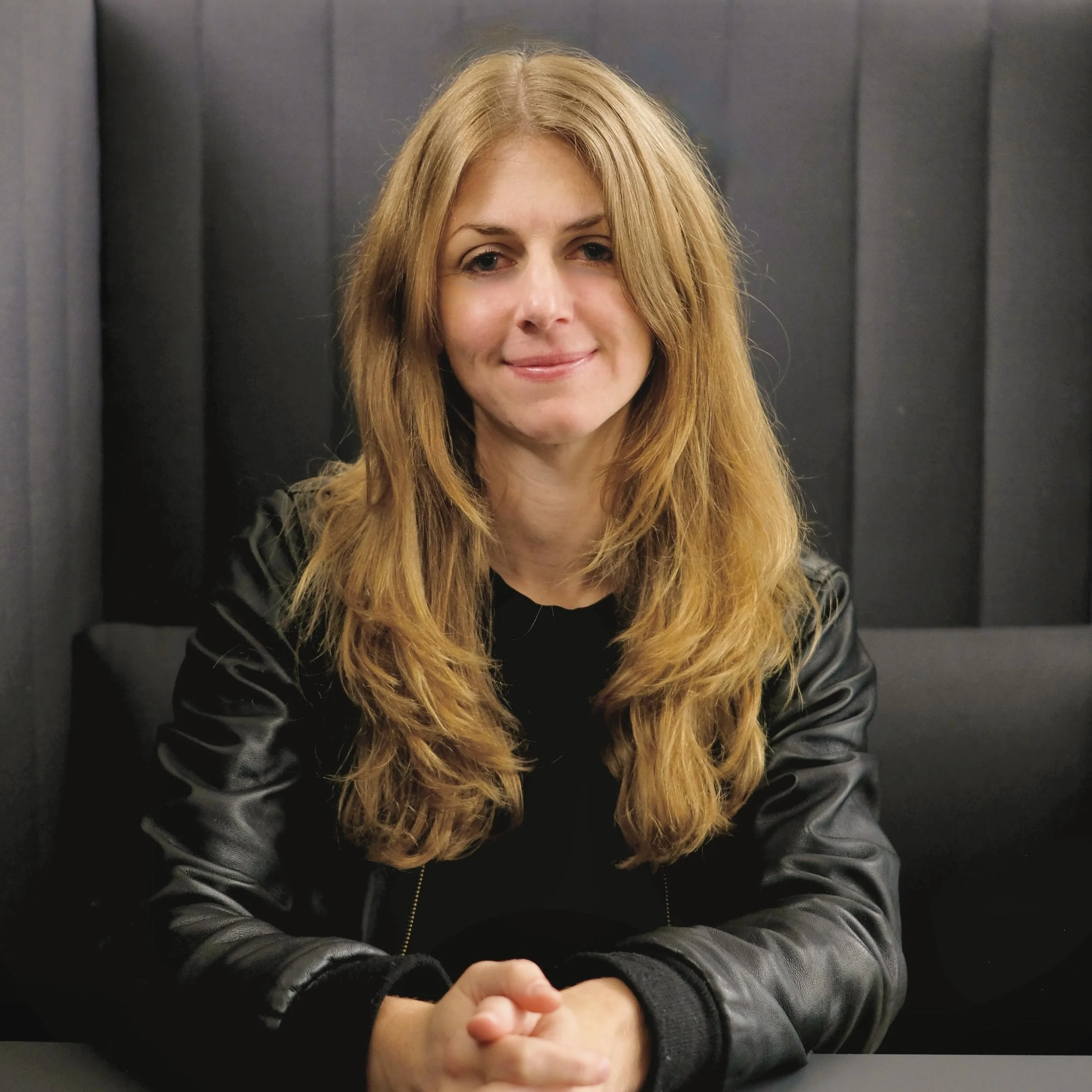
Jessica McKellar is the co-founder and CTO of Pilot, a modern accounting firm where 100+ accountants serve over 3,000 businesses—enabled by Pilot’s AI technology. She holds computer science degrees from MIT and previously founded two startups: Ksplice (acquired by Oracle) and Zulip (acquired by Dropbox). Jessica is also an educator, teaching Python at San Quentin State Prison, and is a vocal advocate for hiring formerly incarcerated engineers. A recipient of the O’Reilly Open Source Award, she also served as a technical advisor to HBO’s Silicon Valley. Jessica is passionate about using technology to empower people and scale meaningful impact.