
Episode 181: Servant Leadership: Allow Yourself To Be Influenced By Others With Chris West
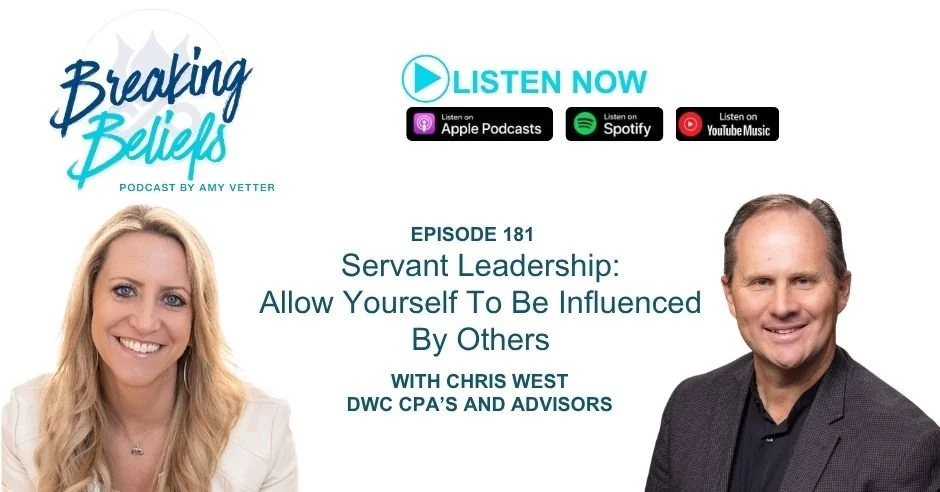
Growing up as a pastor’s kid in Grand Junction, Colorado, Chris West learned early on that leadership is not about directing others, but about serving them. Today, as the CEO of DWC CPAs and Advisors, Chris credits his servant leadership philosophy for his ability to maintain a people-first culture and guide the firm through its impressive 80-year history. Join us as Chris details his unique path, from his initial aspirations of becoming an archaeologist to his 30-year tenure at DWC CPAs. We discuss how his father’s influence shaped his commitment to listening, extending trust, and allowing himself to be influenced by those he leads. Chris also reflects on bridging generational gaps in the workplace, finding personal purpose through Simon Sinek’s Find Your Why framework, and rediscovering his creative passions. This conversation offers a profound look at how personal values drive professional legacy and long-term career fulfillment.
How many hours did you spend last week looking up the same tax questions your team already answered last month?
Most firms lose time to duplicated research, scattered knowledge, and juniors who can't find the answers they need. So, partners get pulled into basic questions instead of strategic client work.
CoCounsel Tax is the AI tax professionals count on. It gives your entire team instant access to expert-level answers with citations—trained on tax code, regulations, and Thomson Reuters' trusted content. Consistency goes up. Rework goes down. Your people spend time advising, not searching.
Learn more at tr.com/cocounselAYR. This episode is brought to you in partnership with Thomson Reuters.
---
Watch the episode here
Listen to the podcast here
Servant Leadership: Allow Yourself To Be Influenced By Others With Chris West
Introduction: Defining Leadership With Chris West
Welcome to this episode of the show, where I interviewed Chris West, a CPA, PFS, and CEO of DWC CPAs and Advisors and DWC Wealth Advisors. He joined the firm in 1996, became the principal in 2009, and was appointed CEO in 2019. With extensive experience in tax planning, mergers and acquisitions, real estate taxation, and business advisory services, Chris has guided businesses and high-net-worth individuals through complex financial decisions. As CEO, he focuses on strategic growth, talent development, and exceptional client service. He is a CPA, a personal financial specialist, and a Series 65 investment advisor representative.
He holds an accounting degree from Colorado Mesa University and serves in leadership roles with regional business and community organizations. During this interview with Chris, we discussed his life story and his leadership journey. He shared his background growing up as a pastor's kid in Grand Junction, Colorado, where his father started a church and parochial school that still exists today.
He discussed how his father's servant leadership approach has influenced his own leadership philosophy, and he emphasized the importance of listening, allowing oneself to be influenced by those being led, and extending trust. He explained how his firm takes sabbaticals, and on his sabbatical, he brought back his love for the saxophone and worked on finding his purpose through Simon Sinek's Find Your Why framework.
You are going to love this episode, learning Chris's story. Along those lines, this episode is sponsored by Thomson Reuters. How many hours did you spend last week looking up the same tax questions your team already answered last month? Most firms lose time to duplicated research, scattered knowledge, and juniors who cannot find the answers they need.
Partners get pulled into basic questions instead of the strategic client work. Co-counsel tax is the AI tax professionals can count on. It gives your entire team instant access to expert-level answers with citations. It is trained on tax code regulations and Thomson Reuters trusted content. Consistency goes up, rework goes down, and your people spend time advising, not searching. You can learn more at TR.com/CoCounselAYR. This episode again is brought to you by Thomson Reuters. I hope you enjoy this episode. I know I did. Lots of great takeaways for us to talk about in our mindful moments.
---
Welcome to this episode of the show. I am excited to have Chris West from DWC CPAs on with me. Chris, before we get started, do you want to give a little introduction about yourself?
Thank you, Amy. It is great to join you today. I appreciate all the good work you are doing in our industry and on your show.
Thank you.
Certainly, I, Chris West, am a CPA and the CEO of DWC CPAs and Advisors. Next week we celebrate 30 years. It is crazy to be with the same firm. I started with the firm out of college in 1996 as a staff accountant and the last seven years as the CEO of the firm. A wonderful experience working with fellow leaders and accountants here at the firm, finding new ways to grow ourselves and to serve clients and serve our communities.
We are a Western Colorado-based firm. We are well removed from Denver. People think Colorado. They think Denver. The other side of the state, in the high desert mountainous region of Colorado. We serve a lot of agriculture clients and small business clients, hospitality clients, and have a firm of 90 people across four offices that serve Western Colorado and beyond. I am proud of our group. It is a great group. People and culture are a critical part of what we do every day.

Servant Leadership: People and culture are a critical part of what we do every day.
I love that. We will definitely get into that. Why don't we start off with your story? Did you grow up in Grand Junction, Colorado?
I grew up here in Grand Junction, Colorado. I like to tell people I was born in 1973 in Racine, Wisconsin, but my parents moved here to Grand Junction in 1974. I am pretty much as close to a native as you can get and love the area. It is certainly laid back. If you enjoy the outdoors and being outside and landscapes, this is a great place to live, raise a family, and just vacation in case you are from out of the area.
That's awesome. How did your parents end up in Grand Junction, Colorado, from Wisconsin?
My dad found an engineering degree, has an engineering degree. He is not with us anymore, but he passed away ten years ago.
I am sorry.
No worries. Wonderful man, one of my heroes. My mom and my dad moved out here. He pursued an engineering job after he graduated from college. The unique twist is that he became a pastor. He is a pastor of a church here in Grand Junction. I was a pastor's boy. I was a pastor's kid.
Interesting. I do not know if you know Gary Thompson. We had the same discussion because his father was the same, and what it was like growing up being the family in the church.
Roots & Values: The Lessons Of A Pastor's Upbringing
I grew up with a great, just great family, loving, caring family. Sports were a big thing in our family. I played baseball, basketball, and football throughout junior high and high school. My mom loves music, played the piano, and turned me on at age fourteen to the saxophone. I mention that because I still, to this day, as a side hobby, play the saxophone. Quite often that is in a church setting or community setting or just practicing. I even have a few YouTube videos out there.
You are going to have to give me those YouTube videos.
I can do that.
Let us get to that in a second. I would love to understand how your dad went from engineering to being a pastor. Did he do both?
He did both for a couple of years. This is in 1974, or 1975, let us call it maybe into 76. You obviously do not recall those years, but that should be roughly the time frame that he did both. As the church grew, he then focused just on the church. In fact, he started a school that was connected to the church and which still exists to this day. My mom and my younger brother run the school here in Grand Junction. It is a private parochial school that is here in Grand Junction.
What are the grades there?
It goes from kindergarten to high school. It was a school that grew quite a bit, 150 kids in my day, back in the ‘80s, early ‘90s. It is a little smaller now, under 100 kids.
You and your brother went to the school as well, I am guessing?
Yes, my brother is seventeen years younger than I am, so we were not in school at the same time. My brother is the surprise of the family, but he did go to that school and is now the administrator or principal of the school.
Was your mom a teacher, or what was her background?
She did secretarial work and still does, at almost close to 80 years old. She is 77, is going strong, and still does secretarial administrative work. She jumps in and does whatever is needed.
When you first said your dad, you said he was your hero. Why was he in that category for you? What makes you say that about him?
He just had a tender and kind heart, as any pastor probably does, and a love for people. If I had to sum up my dad, it would be servant leadership. That is what shaped a lot of my belief system and thought process and mindset around leadership. Servant leadership is paramount in my thinking as to how one should lead. He was the poster child for servant leadership.
Can you give some examples of why you say that?
Servant leadership, to me, as it sounds, is serving those that you lead. That does not mean you are not direct when the time comes to be direct. That is being clear with your direction, as kind. It is certainly having care and empathy and compassion for those that are in your care and under your direction. To me, I like to think of it as, are you listening more than you are talking? Are you hearing your people? Are you trusting and extending trust more than you are withholding trust or using the phrase like trust but verify, which might be. I trust, but not so much. It is freely extending trust.
To be honest, I think a big word for me, Amy, when I think of my father and think of servant leadership, is allowing yourself to be influenced by those that you are leading. That is a tough one for a lot of leaders who have a lot of experience, have a lot of knowledge, and years behind them to think, because that word influence gets used a lot in leadership, as it should. Those that you are leading, to allow them to influence you is a tough thing. It goes a lot towards building the leadership capital of people.
I would mention my dad, but I will also mention I do not know if you know the name Jocko Willink, but he is a great speaker, former Navy SEAL commander, I believe. He has done a lot of work out there, written books. He has done work with Simon Sinek, I believe. He has got podcasts and video content that I think are well worth listening to. I am dovetailing off of what he talks about, and one of those is just that allowing yourself to be influenced by those you lead is a key part of building leadership capital with those you're trying to lead, as well as extending trust, as well as listening versus barking orders.
It is interesting to hear someone like Jocko Willink, who is a very intimidating, big guy, Navy SEAL commander, and it is very influential to hear him talk about how the Navy SEALs approach leadership within their ranks. I tie that back to my dad. My dad very much lived a life 10:09 under that servant leadership umbrella.
For him to build a school and grow a church is very entrepreneurial too at the same time. What was that driving force for him? What was his purpose or mission behind it? Why was it important to him to do that?
The Servant Leadership Blueprint: Empathy, Trust, & Influence
Certainly, as any pastor with a religious background and a very much spiritual life, very important to him, motivated by the spiritual element, the calling, if you will, being called to serve. For my dad, kids, just young people in general, were near and dear to his heart. The entrepreneurial spirit to start a church and a school certainly was embedded in his love for kids and watching them grow, giving them chances. To his fault, many times, he would give 2nd, 3rd, 4th chances to young kids who were prone to getting into trouble and making bad decisions. He was always there for them and gave 2nd and 3rd chances when others may be done after the first chance. He certainly had a huge heart, a big heart, and a heart for kids.
That comes from a place of non-judgment, which is a very hard thing to do sometimes as an adult, whether you're a leader or a teacher, or just trying to be in their shoes of what their circumstances are and how to help them from their vantage point to get where they want to go. Did your dad have struggles in his life? Why was it so important to him to help these children?
His upbringing, again, very solid. His grandfather and his dad provided a great childhood for him. I do not know that he had any one experience that I recall that might have led him down the path of wanting to guide and coach young people in their lives and to grow and to become just better people. He certainly loved sports. In fact, before he went into the ministry, he was drafted by the New York Mets to play in their farm system, which he turned down to come to Grand Junction and start the ministry in that setting.
Even at the school that he started, sports programs, I mentioned that I was a part of, baseball, basketball, football, and others. He turned and loved to use sports to bring people together, young people together in the team setting, competing and learning lessons, life lessons on the football field, baseball field, or on the basketball court.
Was he coaching your teams or the sports you were in?
He would coach. There were other coaches. The school grew to the point where he couldn't do that all, and he wore that many hats. We had a lot of different coaches. He would coach, even sometimes assistant coach, when the need called for it. He was a good coach. He was a very good coach.
You said your mom was a musician. You got influenced by that. How did you end up choosing the saxophone, because that is a very complicated instrument?
It is not as complicated as one might think. Anytime you have to blow into a piece of metal and move your fingers, it has some element of complexity to it. I just fell in love with the sound of it as a teenager. In college, I graduated with a Bachelor of Science degree in public accounting, but a minor in saxophone performance. I played in the college jazz ensemble and did a few of those types of things while in college, and continued that for a while.
Outside of college, as I started my career here, I mostly did it either in a church setting or other small groups. I got away from it for quite a while, Amy. I would say almost twenty years where I would do very little playing over that twenty-year period until about four years ago. I intentionally took a sabbatical from work back up and said, “I am just going to intentionally practice and put more effort into my saxophone.”
I did that four years ago, and that is what led to me doing a few videos that I have on YouTube, as well as just more intentional playing here in the community. It has been a nice part of my life that plays against the right-brain, left-brain of being an accountant and then a musician. We have got a few people in the firm who operate the same way who are musicians or in some form or fashion are artists or are going to find that release through an art form. That is a nice healthy thing to embellish and to cultivate in a professional way.
It is interesting because I grew up playing the violin, and I gave it up once I was in an orchestra, like right after college, but then I gave it up and threw a series of starting bass guitar and other things with my kids as they were growing up. About 3 or 4 years ago, I picked up the violin for the first time as well. Did you find, like for me, I thought I would forget so much, and I did not, like it was just like home?
That was the same for me. I had not completely stopped playing, but I intentionally ramped up the practicing more so than that previous twenty years. I found that I can still get a sound out of this and read music and know how to listen and transpose and those types of things. It is just like riding a bike.
It is just having the time that you had when you were younger. When you were younger, did you know you were going to do accounting, or how, like, growing up with this background, what did you think you were going to do?
Career Pivots & The Accounting Professor Who Changed Everything
I thought I was going to be Indiana Jones, to be real honest, and be an archaeologist or travel around the world and fight bad people. I guess that could be really young days. As I graduated high school and got into college, I started out as a marketing major. I knew I had business in my heart, in my mind, and a good grasp of numbers. It was not until my second or third year of college that an accounting professor in the principles of accounting class, which I had to take for my business degree, really influenced me with her energy.
Her style and the way that she presented accounting in that accounting 101 class in college. She just brought a level of fun and excitement to accounting, and she noticed in me that I had a good grasp of numbers, debits and credits, and was doing well in her class. She pulled me aside and convinced me to change majors. She became my advisor. The rest is history, and I changed my major to public accounting.
I love hearing that there have been so many stories about a teacher or professor who really took the time and interest in somebody who affected the trajectory of their career, which is so amazing to me. Often they do not even realize the impact they've made because you move on. It goes back to your dad too, of the impact he was making with those children. You're just laying these seeds of people going off with their lives and making improvement, which is so cool. You started with the firm that you are leading now right out of school. What has been important to you about that firm, like to be there your whole career? What has made it lasting for you?
I am probably a loyal person just in my genetic makeup already. Just to put that out there, certainly it is hard for me to grasp a lot of the concepts I am sure you hear and see just today in this day and age, where you see a lot of people say and coach even towards changing your career often. Nothing against that. I guess that's just been in my genes. Maybe that's old school, but I stay loyal. I thankfully also found a place where, over 30 years, the people have just been phenomenal.
The partners that I came up with and learned from throughout the years, and the people that are shoulder to shoulder with serving clients and growing careers and developing new and better ways to talk with clients about money matters. It has been exciting, and it has pushed me, and it comes down to walking in every day and enjoying the people that you hang out with and do work with. The firm is just an amazing firm. It has a 70-year-old coming up on 80-year history here in Western Colorado. That's because it has been able to develop people who know how to flourish in a professional life and develop other professionals to do the same.
Have you seen any differences as different generations have come into the firm and different waves of changes in the accounting profession?
Without a doubt, it goes without saying that the changes are dramatic and I believe positive. I will probably talk about, my comments are going to probably repeat and parrot what a lot of people are saying in this industry, but it's certainly evident that the way that I worked and the people that came before me even putting in 80 hour weeks, long hours, and that's necessary to an extent, I am not saying that that's not important, but the way that the next generation wants to work, which is more mobile, more cognizant of integrating free time and leisure time and other interests, relationships that are not work related, integrating that with work is extremely important.
I like to use the word integration intentionally versus the word balance. I am a big fan of the work-life balance phrase. I would prefer work-life integration where work has to be an important part of my life that provides a lot of meaning and a feeling of earned success and serving others. If having that as a key element in your life, I believe it is important. I see the next generation grasping that. That's awesome. I am 53 years old, us 50 year olds, 60-year-olds still in the profession need to learn from that and embrace that way of thinking. There is definitely a clash of different generations, but I think it has been good.
How do you stay in the mindset of learning from a new generation and a younger generation? That is not always easy for a lot of people, and I experience it in my consulting world a lot. That this is just the way it is instead of, like, this is the situation we're in. How do we mold and change with it, and going back to your listening piece of this. How have you found the best way to learn from a younger generation?
Leadership Capital: Why Listening Beats Barking Orders
My best response is to go back earlier in our conversation. You talked about Jocko Willink and mentioned influence, and you just mentioned the word listen. Listening is a key part of building leadership capital, and back to influence. I would say a key thing has been allowing myself to be influenced. Part of that involves stopping talking to myself and listening to who it is I'm trying to lead, and then allowing myself to be influenced, whether it's an idea or it's a different way of thinking that is coming from somebody who is junior to me and does not have as much experience in years, but listening and then allowing myself to be influenced.

Servant Leadership: Listening is a key part of building leadership capital, and it comes back to the ability to allow yourself to be influenced by the people you lead.
It does not mean we're going that direction, and we're going to absolutely do what you say, but it is acknowledging and allowing for balanced conversation. I had a partner tell me once, "Chris, you've got two ears and one mouth. Make sure to use them in that proportion.” Listening and then allowing yourself to be influenced, I think, then builds leadership capital to where that person you are allowing to influence you is going to follow you.
You are going to become a better leader to that person because of that humility and stopping, listening, and allowing yourself to be influenced by those you meet. That is a tough one. I know it is hard, and I encourage you. Do not just take it from me. It is powerful to listen to Jocko Willink, Navy SEAL commander, talk about that exact same thing and realize there might be something to that.
A lot of leaders feel like they have to solve everything in a private room with the door closed. Usually there are a lot of answers when you go out and listen that you are not even aware that they are there. What do you think the younger generation should be open to learning about?
You, Amy, stumped me a bit there. I would say that certainly being open to the ideas around work-life integration. Work is an important part of life. It is an element of well-being that should not be seen as negative or a necessary evil. This generation has a good grasp of that, but could even more so embrace the idea of work, integrating work in life, and the work in the two things I think about are earning, earning success every day, earning achievement, achieving and growing every day, and then serving others.
If you can focus on that, I really believe that that is achievable and doable daily, and not every day is all rainbows and sunshine and Disney World, but most days you can find that earned success while serving others. Happiness is going to be there in that progress. Happiness is going to be there in that journey. I encourage the next generation to embrace work-life integration as an important part of overall happiness and wellbeing.

Servant Leadership: Happiness is going to be there in that progress. Happiness is going to be there in that journey.
What has your career been like now looking back on it, like what has been a really important learning for you about your career and how it has affected you in your life? What have you appreciated about it?
I certainly have appreciated the connection with people from the clients to the team inside the firm, learning and growing from different ideas, mindsets, points of view, and being able to share. That has been huge in career development, in my opinion. Just the ability to, I guess, always ask, how can I reinvent myself? A powerful, powerful book I read recently, Amy, was just a couple of years ago, and it was another person that I highly recommend. It is Arthur Brooks. I do not know if you know that name, but you mentioned Simon Sinek earlier, and you mentioned Jocko Willink. Arthur Brooks is what I put on my top five authors and speakers on happiness. He wrote a book called From Strength to Strength. It really challenged my way of thinking.
The book essentially said, once you are in your mid-40s to early 50s, your career is in decline. I'm reading this book thinking, “This is a bummer.” Your knowledge, your ability to go, go, go and take on the next challenge and tackle the world and the world of business and the world of accounting, that it is in decline. It was a tough read for a while, but when you read the whole book and really and truly realize the exciting part is that there is a next step to every career, especially those in the thinking careers. We are in accounting.
All of the knowledge and experiences that we have accumulated for 50 years have now crystallized in his book, his hypothesis, that has crystallized to a point where now you jump to a new curve instead of trying to tackle new things and skills. It is taking those skills and what you have learned in those experiences and then helping others primarily. There may be multiple ways to allow that crystallized intelligence to come out, but helping others, coaching, guiding, and leading others down a path where you came from is the idea behind it.
To your question about rewarding careers, to me, it is being able to reinvent yourself as Arthur Brooks talks about and say, “What can I do from here forward that does not have to be and have to look like how I did it the first time 20, 30 years. That is a big change I am going through right now. I had a prescription two years ago, and it was a life changer for me. It was a game changer.
There are those moments in so many people's lives where you have to step back and say, “Am I pushing just against a wall, or like, where am I not seeing? What am I not seeing?” It reminds me. I got this visual in my head with you talking about this because I am 52. I am in your same age range, but when you start your career, you're like running. For those that really want to go up the ladder and succeed and achieve.
I got this visual of, this was probably like, 15, 20 years ago, but I was living in South Florida with my ex-husband, and we decided to take tennis lessons. My ex-husband started getting better at it, and he started playing with some partners, but I was watching one day, and he was playing against someone, so he was, late thirties, mid-thirties. He was running all over the place, and he was playing against a pair of probably 70-year-olds, and they were literally standing in one place and knew exactly where to hit the ball.
He was going back and forth, back and forth, back and forth. They were winning. That's the thing, like, it's this image that reminded me of what you were saying of just like you're running, running. You get to this point where it's like, I do not need to run. I can use my expertise in a different way to help pinpoint other people to go in different directions or more strategic directions than just running in place.
Just running, and running. A concept I love to apply to this too is, in fact, I believe it is in Arthur Brooks' book, but it really hit home with me, which is the concept of Western art versus Eastern art. In Eastern religions, in Hindu or Eastern religions, the concept of art is removing, sculpting. You have a block of rock, and you remove pieces of the block of rock to reveal a beautiful sculpture. In the Western way of thinking, art is adding brushstrokes. It is painting. It is adding more strokes, adding more strokes. That is the beginning of careers, the beginning of life. We're trying to add as many brushstrokes as possible to create the painting. Keep adding. At some point, you switch to the more Eastern way of Eastern religion, which is to chip away at things and to reveal your true identity.

Servant Leadership: In the Western way of thinking, art is adding brushstrokes. In the Eastern way, art is removing, sculpting—chipping away at things to reveal your true identity.
That is the journey. There is no rush to get there. That's the exciting part. You talked about a sabbatical. Maybe you can give everyone a better understanding of what that is, how it came to be, and why.
Reinventing Yourself: Why Sabbaticals Are Essential For Longevity
A sabbatical is part of the program we have here at the firm and have had for at least ever since I joined. For at least 30 years, we have had a sabbatical program at the firm. Historically, it has been for the partners every five years. It takes two months and can even expand to two and a half months. Over the last several years, we have expanded that sabbatical to even include our managers and our income principals. We have two dollars per person. There is a month's sabbatical for our managers. That is a nice way for even our non-partners to experience an extended length of time, uninterrupted.
In my last sabbatical, I have had two sabbaticals in my career here at the firm. The last one was in 2022, I believe, and so that was an interesting sabbatical in that I was a few years into my CEO role, and I went to my board and asked, for the most part, to remove client responsibility from my place. He was the CEO. The firm was my main client. Asked if I could take a sabbatical during the busiest of seasons, and that was February 15th and April 15th. I was the first partner in the history of the firm to take a sabbatical in our key season. I did that.
My board was very happy to say, “That makes sense. We're all busy. You can just go have your sabbatical, and we do not have to be bogged down by you.” I took that sabbatical. It was interesting as well. It was during school, so my daughters were in school. We weren't able to do a big trip. We took a week for spring break. That is where I mentioned earlier that I did my renaissance with the saxophone.
As well as did an intentional, I would call it a deep dive into Simon Sinek's book, Find Your Why.Sure, you know, Start with Why. He wrote a less popular book, but Find Your Why is built for individuals. I went through his process. He laid out that book. I worked with somebody else as well that helped me think about my upbringing and relationships throughout my life and how that has impacted me, and tying into some conversations we have had, my dad and coaches I have had over the years during my younger formative years. That was a very engaging process. From that, coming out with finding your why and developing the hows, how you let your why come to life every day has really stuck with me, and I use it even to this day.
That was a key piece in coming out of my last sabbatical. I highly encourage sabbaticals. If you're at a firm that has a sabbatical program, make sure you take advantage of it. Use it to recharge, to reconnect with maybe a long-lost relationship that some person that you've fallen out of touch with. Go learn a new skill, as well as go see. A lot of people take big trips, and that's great too. Make sure you learn something and really absorb a different culture. I believe it's a wonderful opportunity just to break away.
I just wonder how many people need a framework for that because you're someone who has a lot of interests. I'm like that too, where work can get in the way of that easily. I can fill my time with all my interests. Some people just love to be at work, and when work is taken away, it's like they do not know what to do with the time. It is a good thing for that to happen for people who have been in that repetition in their lives. They say, "I have no hobbies. I watch TV." It was like the biggest thing. Have you ever had anyone who has struggled with it or that has needed some guidance on what are some good things to do? When you come back, is there any feedback from the partners that do it on what they did and how it helped them?
I do not believe it's formalized but I think informally there's a lot of discussion around what did you do, what was it like, and coaching and guidance says to, "Here is what I did on my sabbatical," and we build an informal recommendations list, whether it's books to read or movies to watch, to go to, what did you, what did you do that helps just develop your mindset towards life? There has been quite a bit of that.
Thankfully, our partner group is with the sabbatical and how ingrained it is in our culture. For the most part, almost all partners here at DWC have been very good about taking the sabbatical. As you said, for some, I've heard some stories of other sabbatical programs where it is very difficult for some partners to do it. They just do not know what to do with themselves. "What am I going to do if I cannot come into the office?" To me, it's a preview of retirement.
If you're able to take a few sabbaticals during your career, you're starting to train yourself for how to have a successful retirement as well. A partner that's going to say, "I cannot take a sabbatical because I have got too much work and I'm not sure what I would do because if I'm not in the office, what's going to happen when retirement is truly going to end?" At the forefront and necessary. I believe it's a good retirement training vehicle as well.

Servant Leadership: If you're able to take a few sabbaticals during your career, you're starting to train yourself for how to have a successful retirement as well.
Money, Experiences, And Finding Peace In 'Enough'
I agree. It is important. It's almost like a forced thing that should happen in many places because I cannot tell you how many firms I've been in with partners that are in their 70s still working seven days a week, because they cannot let it go. Thank you so much for sharing your story. There have been so many great tips in it. I love that I'm with some rapid-fire questions. What I'm going to ask you first is a category. Pick either family and friends, money, spiritual, or health.
Since I'm an accountant and I love the topic of money and personal finance, and it's where we spend a lot of time in our daily lives, I'll choose money.
Perfect. Things or actions that I do not have that I want with money.
Things or actions that I do not have that I want to have. Things or actions. I'll throw maybe a curveball at you. Clarity and peace around what is enough. That being honest, I think most people, when it comes to money, that's a tough one. What is enough? Usually your mindset is more and more. More and more people need more, bigger raises, paychecks, to accumulate more wealth, and do not give me your all. Money is important to me. That's in my heart as an advisor as to money and money matters. More and more, we as advisors can coach people on the concept of what is enough and how we can find peace and strategy around that concept of enough. I do not know if I have that yet. That's what I'm working towards, and that's what I want.
I went through that in COVID, just with having everything hit at once with the speaking business and training and consulting, and I owned a yoga studio. It could not have been like the two worst industries to be another one to two of money. That was a flip I had at that time in my life of how much do I need versus how much can I make. There is a big difference between really having to map that out for yourself. I love that. Things or actions I do have that I want to keep with money.
I do have that I want to keep. I will say experiences because experiences are tied to money. To me, it comes down to five things that you can do with money. One, it's to buy things. Two, give it away. Three, it's to pay somebody to do something for you so you have free time. Four is to spend money on experiences. I guess number five is to save and invest, which is important as well.
To me, experiences are a big part of creating happiness and spending time with people you love. Just got back from a trip to Italy three weeks ago and had a wonderful time creating experiences. Those are things we're important to our family right now. We're spending money on things that create experiences. I have got it now. We've been actively doing it and want to do more of it.

Servant Leadership: Experiences are a big part of creating happiness and spending time with people you love. We're spending money on things that create experiences.
Things or actions I do not have that I do not want to have with money.
I'll make this one easy. The Lamborghini. I do not have one. I do not really need one. I'm not a car guy. I'm not a car guy.
Lucky you. People drive them crazy. Last one. Things or actions that I do have that I do not want.
In the context of money, I guess I would say a mortgage. I have got one and am trying to get rid of it.
There you go.
We're part of a plan.
Just as we close out, is there anything that we did not cover that you want to make sure we close out with or that you want to emphasize that we talked about today from this conversation?
We covered a lot, and I'm thankful for the opportunity to discuss. If there's anything, I'm on this journey with you and with others and with those I'm leading and those in our profession. I do not even know. A thirty-year career sounds like a lot, and I guess it is, but I'm still learning and growing, and so coming from any type of high horse hopefully is not what I'm presenting.
I'm learning every day, new concepts and ways to reinvent the need, even to reinvent myself, and we encourage others that are leaders in our profession or those that are in our profession and climbing that ladder and trying to develop careers to continue to know that happiness is a journey. The joy that you get from that journey is just being on the journey and finding achievement every day and progressing every day towards that, not necessarily trying to achieve it at the end as this holy grail of going, "Now I'm happy and fulfilled."

Servant Leadership: The joy that you get from the journey is just being on the journey and finding achievement every day, progressing towards that
The arrival fallacy of thinking that way usually causes even more depression and problems. Just enjoy every day to progress towards being happier every day. That would be something I would want to leave with everybody, and not that I have figured it out. I'm trying to learn and grow with everybody else, and hopefully together on that journey, we can influence each other.
Thank you so much for being on and sharing all your great nuggets of knowledge on this journey. I appreciate your time.
Thank you, Amy.
---
Mindful Moments: Key Lessons In Servant Leadership & Growth
Now for my mindful moments with this interview with Chris West. He started his story talking about Grand Junction, Colorado, and really being a part of this firm since he graduated from accounting and started in 1996. We do not really hear those types of things anymore, where someone dedicates their entire career to an organization, a firm, and what that really means to grow with that firm and find your purpose.
One of the things that he talked about that has always kept him there is the people and the culture of the firm that he has tried to also make sure stays intact and good. We got into a conversation about his father through that. When we talked about that, his father was a pastor, but had actually changed his degree. Originally, when they came to Grand Junction, Colorado, this was a part-time passion of his father's to start a church and then eventually start the school that was K through 12.
He really watched his father and how he served others and led others. Some of the things I wrote down were that he had a tender and kind heart, he had a love for people, and he was a servant leader. I think it's really important that we break down servant leader because I think the term gets used a lot, but maybe not defined, or people are not being really clear on what that means.
I asked Chris, “What does that mean?” This is how he defined it. That it is direct when you need to be. Being a servant leader does not mean that you are not giving feedback. It actually means that you are giving real feedback, in real time, which does show that you care and you are in service to someone that is actually dedicating their career to you and to your organization. We need to treat that with care.
The second thing he said was that he had care and compassion for the people that worked for him and for the children whose lives he was trying to improve. That is important as well. Always have a vision of who we are serving, and we are serving multiple people as a leader. We are serving the people that work for us. We are also serving our clients or our customers. We have got to have a view of who those people are. They are not just names on a page. They are people with responsibilities.
They are choosing to work with our organization or firm, whether that is their career or providing their work for your firm to be able to do services with. That is a lot to hold onto. That is a lot to take seriously and not to take for granted, and make sure we see people as human, not just a name on a page. The other thing that is really important is that you are listening more than you are talking. What happens a lot of times is people become leaders. They are asked to talk more and listen less, or people are afraid to give their real opinions because you are talking to a person with power that could actually hurt your career.
The other thing that Chris talked about was making sure that you trust your people without having to verify what they're doing. That really goes in two things. One is that we're not micromanaging or not empowering them and giving them the work so that they grow as a person, but also trusting that they can do it without pounding them about it or believing that they're not going to be able to do it without you.
It is really hard a lot of times to get that skill. I do not know at this point probably thousands of people, and this is probably the number one thing that comes up over and over again is delegation and actually trusting the people under you. It's understanding the process to do that and allowing yourself to listen to your team so that they might get to an answer differently than you. It's allowing yourself to listen and be influenced by how they got there. Maybe it's not the way you would do it, but it's always something of curiosity to see how another mind would actually get to the same answer or a different answer, and learning from that.
We can grow and expand no matter what level we are in the organization. Now, the other thing that we talked about was purpose, and purpose being a really important thing that when he talked about his father, he talked about how motivated he was with the young people that he was trying to help and how much they mattered to him and that he gave them chances to help them learn. This is an area that I see a lot as well, is that as soon as someone screws up, we personally brand them, and it's very hard for them to ever recover from that.
Instead of allowing someone, even if you want to call it failure or mistakes, and that's usually what it is, to give them the chance to learn from it. Now, if you give them the chance to learn from it and you've helped them a number of times and it's not going anywhere, that is a different story, and you actually need to take action on that. If you've given them the opportunity to learn from their mistakes and they recover, how about giving them that chance to really show up in a new way and feel confident and be seen as someone that is really trying hard to do their best.
With all of that, I thought it was interesting that for Chris, he did not start in accounting. He actually played jazz growing up. He got away from it during a big portion of his career. He really, in the beginning, was not absolutely clear on where he was going. It was not until he was in his third year of college that his professor influenced him to go into accounting. This is so important.
I have done so many interviews now where there's been a teacher, a professor, a parent, someone that's taken notice and shown someone the path of their skills that there's no way if you've never seen an accountant or someone in finance to know that you're demonstrating skills that would go into that area without an expert actually being able to tell you, “I see you. I see your gifts.” This is what they could translate to you.
I feel like this is such an important thing because so many times we'll never know when we give people those opportunities what they turn out to be, but it is life-changing. I've heard it so many times on this podcast about how life-changing it is when we take notice of people and actually take a moment, a beat, slow down, and have the conversation with them and explain what we see in them and what the opportunities are.
That could even be with their career and letting them know what's up ahead for them as well and what kind of skills they would need to be able to achieve what you think is possible for them. When someone believes in you, it changes everything. It really does come back to servant leadership that someone matters. This interview was great. I could go on and on, especially the part about sabbaticals and how important that is and taking time off so that you learn skills outside of work and can retire one day.
The number of people that I've seen still working in their 70s because they haven't figured out what they would do with that time is a lot. This is really important to find happiness outside of work and something that you enjoy. I love that he picked up the saxophone to do that with and read books about his purpose and how to constantly reinvent yourself. You are not done. It doesn't matter what age you are. You still have the opportunity to evolve.
Do not give up where you are, and just know that everyone has a unique gift. It's just up to us to uncover it and decide what we wanna do with it. Have fun with it. Make it our job, whatever that may be. I want to thank Chris for being a guest on this show and sharing so many great stories. I also want to thank Thomson Reuters for sponsoring this episode, and I really engage with our sponsors because they do help us to make sure that we can keep going with the show. We have over 180 episodes of the show at this point.
One of the things that is really important about what Thomson Reuters is doing is coming up with these AI tools that are really gonna lift your staff and lift your teams to be able to deliver other services. This episode was focused on co-counsel tax, and it really allows your staff to get some of the answers that they need that are trained on the tax code. It's from software that you trust.
What it does is make sure that there's somewhere else for someone to be able to ask the questions that they need to ask in order to deliver the work that you need by those deadlines so that you can spend more time with your clients. If you want to learn more about this, it's TR.com/CoCounselAYR. I want to thank Thomson Reuters again, and thank you for continuing to listen to us and be a part of this journey. I really appreciate it. Just remember that the energy that you create is contagious. Be intentional as you go out there, and I look forward to connecting again at our next episode.
Important Links
About Chris West
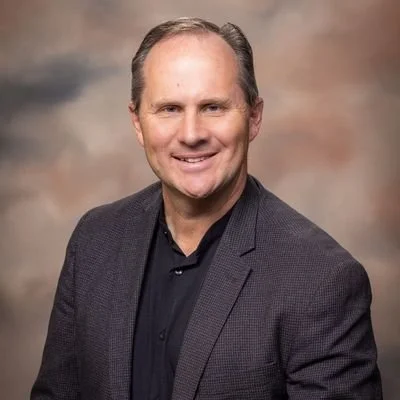
Chris West, CPA/PFS is CEO of DWC CPAs and Advisors and DWC Wealth Advisors. He joined the firm in 1996, became a principal in 2009, and was appointed CEO in 2019. With extensive experience in tax planning, mergers and acquisitions, real estate taxation, and business advisory services, Chris has guided businesses and high-net-worth individuals through complex financial decisions. As CEO, he focuses on strategic growth, talent development, and exceptional client service. Chris is a CPA, Personal Financial SpecialistTM, and Series 65 investment advisor representative. He holds an accounting degree from Colorado Mesa University and serves in leadership roles with regional business and community organizations.