
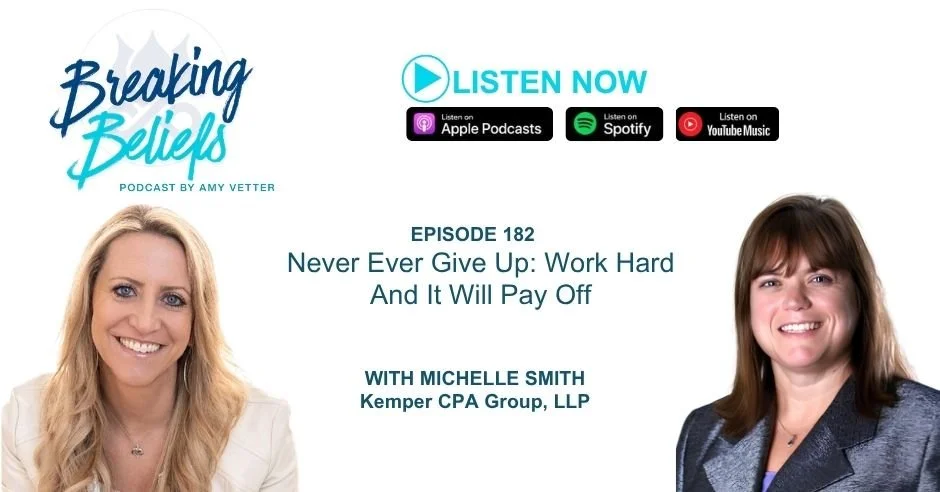
Rising from humble beginnings in North Central Indiana to becoming a powerhouse partner at Kemper CPA Group, LLP, Michelle Smith demonstrates that resilience and dedication can transform your career trajectory. In this episode, Michelle shares her inspiring journey of overcoming early challenges, including balancing motherhood at sixteen while pursuing her dream of becoming a CPA. Discover how she achieved significant audit practice growth, scaling her practice from $350,000 to over $1 million through strategic networking, board involvement, and an unwavering commitment to her professional vision. Join us as Michelle discusses the importance of hard work, maintaining strong relationships, and finding the essential work-life balance necessary to thrive in the competitive world of auditing.
---
Watch the episode here
Listen to the podcast here
Never Ever Give Up: Work Hard And It Will Pay Off
Welcome to this episode where I interview Michelle Smith. She is a CPA and a partner in the Evansville office of Kemper CPA Group, LLP. She has nearly 30 years of experience in auditing with the concentration and not-for-profit and governments. She obtained her Bachelor of Science Degree in Accounting, in 1991 from Ball State University. She is a partner in the Evansville office and as a member of the firm's quality control committee. She is also a member of the AICPA, the Indiana CPA Society and is on the not-for-profit conference planning committee for the Indiana CPA Society.
In addition, she serves as a treasurer for Chemo Buddies, on the Lilly Scholarship Committee and Community Goods Grants Committee for the Warrick County Community Foundation, is a member of the Vanderburgh and Warrick Women's Funds, serving on both grants committees and is the current President of A Network of Evansville Women.
This interview with Michelle, we went on her life journey and discussed her leadership path along the way. She talks about her background going up from a divorce blue collar family in North Central Indiana, where her mother and her father worked in a glass factory. Her mother was one of the first female workers that achieved a challenge in role in the glass factory. Despite becoming a mother at sixteen and facing numerous challenges, including financial struggles and distance from our family support, when she moved to Evansville for her husband's police career.
Michelle pursued her dream of becoming a CPA and eventually, as a partner at a firm. She discussed how she built her audit practice from $350,000 to $1 million and learned business development through networking, and board involvement. She also stressed the importance of work-life balance during this episode.
Through her story, Michelle has emphasized the lessons she learned from her mother about hard work and perseverance. She also noted the importance of maintaining strong relationships with their family and friends. You're going to love this episode. There’s so many inspiring stories that Michelle shares. I also want to share that this episode has been brought to you in partnership with Thomson Reuters.
Leading firms aren't just working faster during tax season. They've eliminated the prep bottle neck entirely, ready to review, handle document extraction, data categorization and return preparation automatically using a genetic AI built on the co-council platform. Your team reviews finished work instead of building it from scratch.
Partners can get their capacity back. Staff gets time for their advisory work and clients get faster turnarounds and strategic conversations. If you want to learn more visit TR.com/R2RAYR. I want to give a special acknowledgment to Thompson Reuters for supporting this show and the work we do. Also, all of you that can continue to tune in. I hope you share this episode with others that want to just feel the inspiration of someone that didn't have everything handed to her and was still able to achieve the dream she had to be a partner in a CPA firm.
---
Welcome to the show. I'm here with Michelle Smith. Michelle, do you want to just give a little background on what you do? We'll get started with the audience getting to know you a little bit better.
From Blue-Collar Roots To CPA Partner
I am a partner at a CPA firm here in Evansville. Mostly when you say that, everybody's like, “I got all these tax questions.” Michelle does not do any tax work. I am an auditor, so I do all the gap, fast be things and let the tax people do all the tax things.
I’m so glad to have you. Do you want to tell your family as well?
Kemper CPA Group is the name of my firm.
Let's get started with getting to know you a little bit. Where did you grow up? What did your parents do for a living?
I grew up in North Central Indiana, which is not where I currently live. I live in Evansville and we'll get into the story as to why I live in Evansville versus North Central Indiana. I grew up a child of divorced parents. Both blue-collar factory workers. No one in my family had ever been to college. We’re pretty poor.
My mom would not like me saying this, but I remember days where we didn't have food sometimes. We had people bring us food in because we didn't have food. We were pretty poor. I have a brother and a sister who are living. I have one brother who passed. I have two brothers and a sister. Older brother, older sister, younger brother. I’m a middle child. I’m sandwiched in the middle there. That's my background.
What do they do as factory workers? What were their jobs?
They worked in a glass factory. Which, in Indiana, in June, July, August and September is horrible. It’s very hot in the glass factory. Again, this is probably going to come out later too, but my mom was one of the first females in her factory to work with, they called the hot end. I’m guessing what this was, but she would like to swap the molds so when the glass came in, she would swap so the glass wouldn't stick to it. She was the first female in her factory to do that job. In 1978 or ’79, it was not very well received by the men, if you can imagine.
Did she tell you these stories when you were younger? How did you get into that?
I don't remember why. I'm sure she told me that. I know she's told me that she was the first female in her factory to be up there with all the men and things that she would just say. She caught a lot of sexual harassment from men in her job. It happens everywhere. Not just professional places. These weren't like supervisors. These were just other men who were basically her peers, but did not like her being up there because she was a woman. They wanted her to be back doing the woman's job, which was packing the bottles and boxes.
How did she get to that position? How did she become the first woman to do that? Do you know?
I'm not sure how that happened because I was pretty young. I was probably maybe ten years old when she ended up there. There was an opening and she put in for it and got the job. This is how that works sometimes. I know that caused her to become very involved in her union as a union factory. She got very involved in the union probably for obvious reasons. She was harassed and all that. She was an officer in the union. She’s a very strong independent woman.
When did your parents get divorced?
I don't even remember. I think I was like 3 or 4 when they got divorced. I'm trying to think. It was after my little brother was born. He is three years younger than me.
It was just like normal for you that they were divorced growing up?
They were divorced. It’s a very strange way it worked. They were divorced, but we still spent a lot of time together as a family. We spent Christmases. My mom came to Christmas at my dad's parent’s house. A lot of Christmases there until later, when we were younger. We were always at my grandma's house and my mom was there every Christmas even after they were divorced. As I said, I don't remember when they were divorce, but I remember having Christmas at their house into the early ‘80s.
What was your perspective on their job? Since everyone has been in jobs like that around you. Was that your observation of what you did when you grew up? What were your thoughts about it?
Growing Up: Values And Hard Work
They worked very hard and not that I don't work hard or didn't want to work hard, but I didn't want to do that. I don't think I ever had dreams of growing up and working in the glass factory. My two brothers did. Both of them did. My younger one who's still alive, he still does that to this day. He was a plant manager at one point. I had no designs and worked in the glass factory ever.
Did your mom make suggestions like you should? What was her perspective on you working?
She never said she grew up working in the factory. I don't want to feel like I'm tooting my own horn, but when I started kindergarten, they wanted to bump me up a grade. I'm pretty an intelligent person but I was pretty smart even in grade school. She always steered me more towards, “You're going to do something better than working the glass factory.” She didn't ever say those words to me because trust me, that's an honest living, it's hard work.
She just had bigger plans for me. I don't think she ever suggested, “You should go work in the glass factory.” A lot of my family worked there. It’s not just her, but my aunts and uncles. A lot of people. It’s a small-town in Indiana, and it was one of the bigger employers in town, so a lot of my family worked there too.
Growing up, what were your interests? Did you have hobbies or sports?
I joined a band. I was a band geek, as they called us. I started playing the flute when I was in fifth grade and that was what I did. I played some sports. In Elementary School, you do that stuff. Marching is a sport, let me tell you.
That's hot, too.
It's hard work.
What was it that you wanted to be when you grew up? What did you think?
Early Ambition: The Spark Of Accounting
Getting into high school, I was going to go do something with IT and computers. I was very interested in that. You think about that time period, it would have been like, ‘84 and ’85. Computers were just starting to come on the scene. I was going to do coding and all that stuff and then, some crazy reason. I don't remember why this happened. I got put into this bookkeeping class. I was like, “I think I like this.” The teacher said, “I think you need to do accounting.” I'm like, “I’m doing accounting. I'm going to go be an IT person.” I took the accounting class and during that class, I was like, “I want to be a partner at a CPA firm.” I know that sounds crazy but it's a sophomore in high school, that was what I decided I wanted to do.
How did you even know about being a partner?
It was in our books. When you're talking about accounting, they talk about different things you can do with an accounting degree. I just knew I wanted to be a partner. I want to be a partner. I want to work at a CPA firm. I've never wanted to be in private accounting. That's what I wanted to do.
I love these stories because so many times, it's someone that notices something in you. When your teacher said that this was natural for you and you should go into accounting. Did you feel that way too or did it help that she said it to you?
I felt it too. She's like, “Take the accounting class next year,” because I was like, “I want to do computers.” After I took the accounting class, that's like, “I think I like this. I think she's right.”
That meant college and you said no one in your family had gone to college. How were you going to get there?
Again, I was a pretty smart person. I graduated, I don't remember exactly where, but I’m the top ten in my class in high school. I ended up getting lots of scholarships. We’re from a poor family, so lots of federal aid. Some loans, not very much. I just went off to college and there I was. I will never forget. This is my mom. We go to orientation and she's never been on a college campus.
She said, “These parents are just sitting around worried that you can't do your laundry. What is wrong with these people? I'm worried how you're going to pay for this. They're worried that you won't know how to do your own laundry.” Once again, growing up in a single mom household with brothers and sisters. We all need to know how to do laundry. We all know how to cook. We all know how to do it all. We had to. It was a necessity.
Where did you go to college?
I went to Ball State University in Muncie, Indiana.
How did you even choose Ball State?
I may have followed a guy there. Again, I was scholarly, so I had lots of offers from different colleges. One of the ones here in Evansville had sent me some information. My high school sweetheart, who I am married to, was at Ball State so I followed him to Ball State.
I love that. What did he end up doing?
He was in criminal justice and criminology. He became a police officer and moved us to Evansville. That's why we live in Evansville.
How did you prepare yourself to go to college if you had no one around you that had ever been in college? Did you ask anybody what it was like or what you should know?
Balancing Motherhood And College Ambition
I didn't. Maybe I should have but I didn't. I just knew this is what I was going to do and made matters even more complicated. I'm telling myself now. My husband and I had a baby when we were in high school. I had the baby but it was our baby when we were in high school. I was told by many people I wasn't going to go to college. I might as well kiss my dreams goodbye. I was like, “No.” Anybody who knows me now would be like, “Don't tell her she can't do something because she's going to do it.”
How old were you when you had your baby?
I was sixteen when I had him.
What was the decision at that time? If you're already financially strapped, that’s a big decision to keep the pregnancy.
Absolutely, 100%. Again, my mom is a huge supporter. She was like, “Whatever you want to do. I will support you 100%.” She definitely did that for me.
That's so nice. There’s so many stories where so many women at that time and before that time were treated so poorly from being pregnant, by their families.
My family was very supportive of me. Again, lots of families lived around. I hate that. My kids don't have that. I had cousins who were all around, aunts and uncles. Between all of them, I don't think I ever paid a babysitter when I was in high school going to school. I always had someone.
You never delayed in anything?
I did not. Crazy. He was born in early August and I went back to school later in August. I had two or three weeks before I had to go back to school after he was born. The worst thing that happened was one of my teachers one day told me I needed to quit my job because I fell asleep. I think it was English class. I fell asleep and she said, “I think you need to consider quitting your job.” I said, “I don't work.” She said, “Why are you so tired?” I'm like, “I got a newborn at home.” She's like, “What? You're in honors English class.” Honors kids don't have babies in high school, but this one did. I proved them all wrong.
Did you get married then or did you wait to get married?
We did not get married then. We got married right before I graduated from college. I graduated in three and a half years. I went to summer and wanted to get out. My husband was a year ahead of me in school, so he had graduated in May of ‘91, and I graduated in December of ’91 just in time to get married. We got married in November, graduated in December and moved to Evansville the day after graduation. It's a whirlwind.
Life muscles have gotten a lot easier.
I don't know. He moved me five hours away from everybody I knew, which was hard and then took off and went to the police academy for like at least sixteen weeks. It's been a long time. Now, he did come home on weekends, he’d leave me at home. By that point, we had two small children. I was home by myself. I did not get to start right away in public accounting moving from Muncie to Evansville, if you don't know Indiana. Now, it's closer because we have I-69, which goes a lot better.
At that point, you're talking 4.5 hours or 5 hours away from our family and any job prospects that I had from Ball State, they weren’t hiring from Southern Indiana, if that makes sense. I came down and started trying to find some work and found some bookkeeping work. I still stayed in accounting but like bookkeeping. I was like, “This isn't what I wanted to do with my life. I had a friend at one point who was like, “Our might be hiring some people. Are you interested?” I’m like, “Yes.” This is about seven years after I graduated. I was a little bit later getting into public accounting than I would have liked, but I jumped at the chance and here I am.
When did you become a CPA?
In 2001.
After you start working at the CPA firm?
I was determined that I was going to be a CPA, so I sat for the exam right after I got off college and two kids at home. Remember that. You’re trying to study. You're a CPA, so you know. It's not the way it is where they get to take one part at a time. It was all the parts over two days. I had to drive to Fort Wayne, which at that point was six hours away from Evansville. I stayed overnight, and I didn't do so well. I beat myself up again. Again, I was very scholarly. A very smart person. That just will humble you quickly. You must study for it.
Especially in a big convention center.
I was like, “I got to the table that for now,” because where I was working, I wasn't going to get anything out of my seat having a CPA. I don’t know what I was doing at that point, but a bookkeeper. I'm not going to get him more dollars for having that. I put that on the back burner but never left my mind. It was still a goal. When I said that, a friend just came to me and said, “Our firm's looking for some staff, are you interested?” I'm like, “I'm very interested.”
That's awesome. The question for you. With everything that you were dealing with at the time and knowing what your mom went through as a woman. Did you feel like anything was in your way being so young and having babies and the profession that you were going into? Did that get in your way at all or did you feel pretty accepted?
Navigating The Challenges Of Public Accounting
I don't feel like it got my way, but my first job was at a regional firm in Evansville. I don't know exactly where you're from but it's a small regional firm and then we merge with a bigger firm. Whatever challenge they put before me, whether it's being out of town or whatever, my husband and I did whatever it took. I remember at one point, we had to hire someone to come and sleep in our house and babysit our kids because he was working third and I had to try to travel.
I didn't look at that as an obstacle. It was tough days for both of us dealing with that but it sure paid off now getting to where I'm at now. Again, we had no family around. We didn't have a lot of friends to speak up with, because we didn't know a lot of people here. We had a few police officers and their wives who helped us do things, but none of them were going to sit around and babysit at night for us. We just made it work. He and I are a great team.

Audit Practice: I didn't look at that as an obstacle. It was tough days for both of us dealing with that but it sure paid off now getting to where I'm at now.
I wanted to get into that a little bit because of the different decision points you made with your husband starting from such a young age. What is it that do you think makes the great team that you've been able to succeed like you have?
I don't know if I have an answer to that. It just works. There are days. We had some issues with our oldest son. There were days where I'd be like, “I can't,” so he would pick it up. He would be the strong one. It wasn't necessarily like you have to say, “I can't do it.” He just knew it because it was just the two of us. It’s like, “It’s my day to shoulder the way because he can't shoulder it or he knew I couldn't shoulder it.” We started dating, we were fourteen. We've been together a long time. That's amazing. We know each other so well. A lot of it just happens without even saying anything.
It's interesting because I don't know what his family situation was like, but you hadn't seen a husband and wife do that.
That's correct.
How did you even know how to do it together?
I don't know. I shouldn't say my parents were bad role models. They weren't married and I tell people this all the time, my mom and my dad never had a bad board about each other. If they didn't like each other, I never knew that. They never said anything bad about each other. My dad passed away. It's been a while. He died young. To this day, she will not say anything bad about my dad still and he's been gone for 40 years. Maybe that's the behavior that I'm modeling. I'm not sure. We just worked together as a team.
It's important, especially on the women topic because this is something that doesn't get discussed enough. I'm divorced, but when I was married young, it was always about making sure each other's careers were going okay. We would support each other like, “Who's in the biggest need and making sure we could each accomplish what we wanted?”
Which we set very early on and our relationship. Probably even in college, talking about those things. I do think for women having that support is so important. Especially during that time to be successful and achieve your goals. Especially being young with young children. Did he have that example with his mom?
He did. His parents have been married for a long time. It's going to be 60 years. They've been married a long time. Now, his dad was a salesman and traveled a lot. His dad was gone a lot of times. Monday through Thursday, his dad would be gone and it'd be his mom there. It's almost like a single mom raising her kids, but they have a very loving relationship. He had a good example and again, I don't say mine was bad because even though my parents were married, they still had a great relationship at least from my eyes as a child.
I never felt like, “They hate each other or they don't like each other.” My dad would pick us up every other weekend and maybe go stay with him for holidays for a long time. My mom got remarried in the early ‘80s and at that point is when she quit coming to Christmas. Otherwise, she may have kept coming to Christmas. I didn't view it as a loving relationship. It may sound strange to me to say it out loud but they just maintain what they needed to parent us and raise us together.
Which is so nice. Do think too, as you said, him viewing his mom having all that responsibility, he was used to probably helping her? Which probably carried over to your relationship as well just understanding what needs to get done.
Right.
That's pretty amazing. That's a great story, especially in that time for sure. I interviewed another show about a woman that was a superintendent. She wasn't sixteen when she had a baby. She was twelve and they decided to keep the baby as well. They became parents very early in their life and how that transformed her even at the superintendent to look for the kids that are being bullied or the parents that aren't quite making it and realizing what they need. Have you noticed that in yourself at all it's like being able to observe when there's other people that are struggling or trying to make their way in their career?
It's public accounting, so we have people who are struggling all the time for various reasons like time management or time commitment or whatever the reason is. I do try to help them along, but sometimes I feel like the age gap now for the 20-year-olds and me being in my 50s. That puts a little bit of a damper on trying to parent them. I feel like that's what I have to do sometimes, is parent them. I don't mean that in a negative way. Sometimes the age gap prohibits that a little bit, for lack of a better way to put it. Some people tell me that I'm intimidating and my husband laughs. He's like, “You are one of the least intimidating people I know.” He's the intimidating one. Not me.
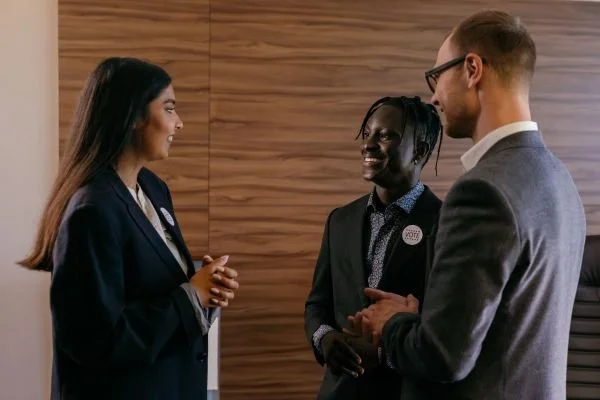
Audit Practice: I just knew that I had to start building a network of people, and I got involved on some boards of directors.
Why do you think they think that?
You were in public accounting, so you look around and it's all men. We don't say all men now, but there's not a lot of women partners in our firm. I won't venture how many there are but I can tell you that there are more men partners than women partners by far. I don't know if they look at you as being a mean person. I’m not sure what the deal is.
Maybe you're confident. Not that it should be an intimidating thing but you have to be a confident person in order to make it through what you've made through in life.
People have told me that. They just like, “You're so confident. That itself is a little bit intimidating.”
Isn’t that interesting?
You want people to be confident.
It's not a weakness. It's good to feel that way and have gratitude for the skills that you have and be able to use that as an example for sure.
I always try to relate things from my life. That's how I try to approach it. It's trying to relate things from my life to their life. It’s like early in my career, I had this. I understand. I try to let them know, like, “I do understand what you're going through.” We all had our first day. We all didn't know what we were doing. It's okay. I tell them all the time. You're going to know if I don't think you're asking enough questions. If I start saying, “Do you have any questions?” I'll be your clue to know that you should be asking me a few more questions.
When you did get started, did you feel intimidated at all?
No. I worked for a very strong woman who wrote me a lot of mean comments. She taught me well. I learned a lot from her.
What did you learn?
How to do this job and how to go out. She made me go talk to clients and that was uncomfortable. It was a struggle sometimes with the generation that we have. I’m not an outgoing person. I am that account. I'm not the person that I am now. I wasn't when I started in public accounting. I had never done public speaking or anything like that. Doing something like this many years ago, I will be like, “I don't think so.” “You want me to go talk to the accounts payable clerk? I’m so nervous.” She pushed me. Some of the things I learned from her were things I wasn't going to do to people who worked for me.
Like what?
I was brand new and she sent me on this brand-new audit I had nothing to look at from the prior year. I had no clue what I was doing. If you've ever done an audit and tried to read an audit program, it's written in some other language that's not English. It's written in English but you know what I mean. You're trying to read it and make sense of it. I had not taken the CPA exam for many years and hadn't studied for many years. It made me feel dumb.

Audit Practice: People will send you business if they trust you. Maybe know that you're going to take care of who they're going to send to you and that's why people send people my way. They know I’ll take care of them.
She would come back and write all these review comments about things I had done wrong and I'm like, “You weren’t here for me to ask questions of.” That was important to me when I became a supervisor, a senior and then a manager and a partner. I wasn't going to send anybody out on anything new or if they were just new, period, on an audit when they didn't have anybody to ask questions. That was important to me.
That was probably the biggest thing I learned from her. How I wasn't going to be a leader. I'm going to take those things, and I'm going to be like, “This is how I want to be a leader. I don't want to be that person that just says, “Go there. Sink or swim.” Sometimes, it's okay but most of the time it's not okay to do that.
That's the thing of creating enough space to be there for someone to ask questions and be approachable as well. What was your journey to getting to where you are?
I started that little regional and they matched with a bigger firm, which was BKD. I left BKD and came to Kemper in 2008. They had a manager position open. I didn't feel like I was going where I wanted to go at BKD. I wanted to be a partner and there was a track here for me to do that. I came here and it was probably the best decision I ever made. It was very scary. I worked at that firm for ten years and loved the people I worked with most of the time. I love the partners I worked for.
You're leaving this known thing to step into something like, “Am I going to like the people?” Kemper didn't have a lot of audit work at that point. They made me do a tax season doing taxes. I'm like, “We got to find audit clients.” I found a lot of audit clients because I am not a good tax person. I know my strengths and weaknesses for sure and tax is not it.
I grew my audit practice from about $350,000 up to about a million dollars. I hear things now in the community when I go out and talk to people they're like, “You're like the not-for-profit expert in the community.” I'm like, “I am? I never said that about myself but thank you so much. I appreciate that.” How did I got here? I don't know. It just happened.
Do you think that that is something that isn't talked about enough of becoming a partner isn't just about your technical skills. It's about building a business. It's entrepreneurial. It’s business development. Where did you learn that skill or figure out how you were going to do it?
Mastering Business Development And Networking
No one taught me how to do this. It's not something you can learn in school. I didn't have anybody to model after because, in this office that I'm in, there are no other audit people. It's only me. There were no other audit partners. There is now, but there wasn't then. I didn't have anybody to model after. I just knew that I had to start building a network of people, and I got involved on some boards of directors.
I get so many requests. I have to say I can't do anymore and then I got involved with a Network of Evansville Women, which is how we got connected here. I get a lot of referrals from that group. I never asked for a single one of them, ever. I learned how to network and meet people. I started presenting at board meetings, which was scary. Talk about being intimidated. You get up and speak in front of the Board of Directors and there's bankers and lawyers.
Although, they don't know anything about accounting. I don't know why I was intimidated about it. They didn't know. They didn't know anything. I knew it all. They didn't know anything more than I did, for sure. It was just developing a network of people. That's how I got to where I'm at now. It’s developing a network.
When I talked to some of the younger people, a lot of people came there thinking, “We're going to come in here and grow our businesses.” I'm like, “I don't come in with that attitude. You got to come in with, ‘I want to get to know you and meet you.’ People will send you business if they trust you.” Maybe know that you're going to take care of who they're going to send to you and that's why people send people my way. They know I’ll take care of them.
You can't go to those things with your hands out. It's how you're going to contribute. Through that relationship, people want to give back. With the work that you do outside in the community, how do you choose that work? As you said, it can get overwhelming being on boards of directors and the conversation works. Are there things that mean something to you?
Boundaries, Resilience, And Giving Back
I'm involved mostly with the organization called Chemo Buddies. They support what we call our friends and their recliners. People who are going through chemo treatment. I had breast cancer back in 2018. I'm a breast cancer survivor. I didn't tell you that part yet. That I got thrown into the mix too. When I went through cancer, I found out about chemo buddies. It’s near and dear to my heart. I do a lot for them. I'm the President of Anew.
I've cut back a little bit of my boards. At one point, I was on five boards. I said, “That's too many.” Three is probably good. I've got an organization I'm going to go meet with to find out about them and find out about their board and decide whether I want to take that one on or not. I do a lot of other kinds of support. Our community foundation has what they called the Community Good Grants. I sit on that committee and I read grants for all these organizations that I know. It's hard because I know a lot of them so well.
A lot of them are my clients. I do that. I do the Lilly Scholarship Program. I read Lilly scholarship applications for kids who are in the county where I live. Those are things I find enjoyment in, especially the grant committees. I enjoy reading those grants and helping pick who's going to be the winner of the grants. I get a lot of joy out of that. Rather than being on the board. I would rather read the grants because I feel like I'm helping more.
Giving someone an opportunity that they wouldn't otherwise have. I appreciate you sharing your story. There's so many great tidbits for people. Is there anything that you think like from a lesson or from your journey that has been important for your career that we haven't talked about?
A lot of my values came from my mom. She’s a very hard worker. She instilled that in all four of her children. I pass that on to my children. They all work pretty hard, too. They don't work in factories. One of them is a teacher, so she's working hard. Never ever give up. People told me, “You're not going to go to college,” and I'm like, “I am going to go to college. I'm going to get that degree. There is nothing that's going to stop me.”
Audit Practice: Never ever give up.
Again, I had my husband. He wasn't my husband then but had him by my side. We worked our schedules around. He did his class at one time and I did my classes at the other, so we didn't have to worry about child care because the baby went to college with me. He did. He grew up on a college campus, which I don't know if I recommend that or not. Especially when the dad lives in the dorm. The guys in the dorm had a great time with him. They thought it was fun to have a little boy around. It just comes down to never ever getting up and working hard. You have to work hard to get where you want to go in life. Nothing's handed to you. Nothing that's worth anything is handed to you anyway.
I have a couple of rapid fire questions. You can pick a category, family and friends, money, spiritual or health.
I'll go with family and friends.
Things or actions that I don't have that I want to have with my family and friends.
Sometimes, I want the ability to say no to people. That extends beyond family and friends. I have a hard time saying no. I could use this example. It would be the ability to say no. If one of my friends' kids is raising money for something, Michelle's buying. I’m not going to say no, whether I need it or not or want it or not, I'm buying something from all the kids who are friends who are selling things.
Things or actions I do have that I want to keep that have to do with my family and friends.
I can't think of anything off the top of my head. I'm sure there's something.
That you don't want to lose with your family.
With friendships, I have some great friends. I lost a friend. She didn't pass away or anything. We just aren't friends anymore. I would love to keep the relationships that I have with my friends. Keep them strong. I hear them better off for the person who I'm not friends with anymore. I've got some good ones who I would like to keep those relationships strong. I had a good friend move away to Florida. We work hard at keeping that relationship strong. We text each other a lot and we go to Florida and visit her a lot. She comes here because her kids live here. We work hard at that. Keeping those relationships strong and it is work.

Audit Practice: Nothing's handed to you. Nothing that's worth anything is handed to you anyway.
It’s an important point, especially since I work with a lot of people that are in public accounting during the busy season. Those are the times they often neglect family and friends and how much that fills your cup and not giving that up during even your busiest times is important.
Fortunately, since I do tax, I don't have a busy season. I'm just busy all the time, because we’ve got all kinds of year, a different year-end of audits. Now that you say that, keeping that work-life balance. I made a decision long ago when I was in public accounting that my role was, I never worked past 5:00 on a Friday during business season before I came to Kemper. I would never work past 8:00 on a Saturday and I would not work on a Sunday.
I have worked there since we did the working at home thing a little bit. I do work at home on Sundays a little bit, but that's family time. I've got to take care of my family. I joke with some of my co-workers, “I have to do my laundry at some point,” and Sunday was the day that I got it done. That is something I would want to keep and I kept those rules from our early staff. I was like, “I never worked past 5:00 on Friday and past 8:00 on Saturday,” because you got to have that time. Set the boundaries, especially if you're in public accounting. You can get your work done. You'll get your work done, but you have to have that time with your family. It's important.
Thank you so much for taking this time to share your story. I look forward to being able to share this with our audience.
---
For my Mindful Moments with this interview with Michelle Smith. I hope you were just as awe-inspired by this interview as I was. You never know someone's backstory and the journey that they've had to get to where they are. Many times, we see a leader. We see a partner, a vice president or a CEO and think that they had it easy, or they got to where they are out of love. When you sit down and ask people their story and understand the trials and tribulations of each person's journey and how they got to where they are.
It is one of those things that allows us to learn lessons about resilience, about how to overcome barriers, and to realize that we aren't alone in this journey. We each have things that we have had to overcome, and be strong enough to persevere. If you want to achieve, understand what it is about yourself to ensure that you can achieve. Each person has unique gifts that allow them to achieve as long as you're open to observing them. You're open to appreciating those unique gifts instead of trying to deny them or not look at them or believe that it can't be you.
You look at a story like Michelle who came from a family where no one went to college. She had no examples of people going to college. What she did have an example of where two parents that worked really hard and her understanding of the importance of getting a college education so that she could change her life in the future because she did not want to work in a factory.
The second thing is what blew me away of her having a baby when she was sixteen years old and never slowing her down. She still pursued accounting, learned about accounting while she was in high school, made sure she got into college and graduated in the top ten of her class even having been pregnant, had a baby and making a decision to raise a baby when you still have two years of school left. How awe inspiring that she and her husband made this decision at such a young age and truly learned how to support one another so that each could be successful on their own but their family could be successful as well.
She also made another important point about how much support that she received from the people around her, and her husband had that with his family as well. That power of community and support that helps people be able to achieve things even in their hardest times. We sometimes don't understand that or even slow down enough to create space for the people that need us. Also, the people that can make a difference.
We don't realize the little differences that we make in somebody else's life like her high school teacher who had an interest in her and explained to her about accounting and how she had the skill set to achieve that. Her husband being a supporter of her being able to pursue her career, as well as her supporting him in times where he needed it as well. This is such an important thing because in order to achieve, we have to sacrifice.
There are times when we have to sacrifice. There's times when we need to pull back. There's times when we need to push forward and it's important that we realize that it's never a straight path and to not make assumptions about the people around us that it was a straight path for them. I know we also talked about personal brands in a way of her talking about how people felt she was intimidating and she doesn't feel that way at all.
We talked about the difference between intimidating and being confident. Few people are willing to say what they're good at and speak up and say they are good at something. If we don't speak up for ourselves, there's no one else that's going to do it for us. Everyone's on their own journey. Everyone is working hard and very few people have time to speak up for someone else. If we do not understand that we're smart or that we have the capability to achieve the things that we want to achieve. There's no way for anyone else to know that as well.
This is important and understanding the difference between intimidating and confidence. That confidence isn't a bad thing. It's only a bad thing if it's used in a negative way toward us. The other thing is understanding that when we work for other people, she used the example of the woman partner that she had worked with when she started out. That a lot of times, we've got to learn what we want to be and what we don't want to be. Both lessons are just as important as what we learn from other people.
We take those things and create our own way of going about leadership and going around how we help other people. Which helped her to be able to make sure that younger professionals had a place to ask questions and they weren't left to just survive and see if they could get through it. We also talked about the importance of relationships and community in order to develop business. Going into sales conversations or meeting new people, we can't have our hand out. We have to look at how we can help.
We come to mind when other people need someone with our services as well. It isn't just about going to network when we're talking about sales. It's about creating relationships and getting involved at a deeper level so people can truly understand that part of you and how much you care. Now, one of the things that we talked about were just some of her lessons that I want to leave these mindful moments with about making sure that you never ever give up.
In Michelle's story, you see that. There were people along the way and I'm sure you have messages in your head of people that are telling you that it's not possible or you can't make it. It's important that we have faith in ourselves and our skill sets so that we can get through it. She also talked about how important it was to have support to not give up what is most important to you, your community, your family, and friends that give you the support that you need in order to be successful and to not expect things to be handed to you.
You've got to look for those opportunities and make the best of them. Understand that even hard opportunities teach us in a moment to help us when we've got a good opportunity coming up as well. I want to thank you for tuning into this episode. Again, this show was sponsored by Thomson Reuters. They are a big supporter of the work that we do and we greatly appreciate it.
One of the things that they are promoting is the ready to review. They handle document extraction, data categorization, return preparation and it all uses agentic AI. It's built into the co-council platform. If you are using Thomson, you should definitely check this out. Take time to learn it. Make sure that your team reviews and finishes work rather than having to build it from scratch.
This program is going to help you get there. It's going to help you get your capacity back. It's going to help you create time for that advisory work that you want to do and it gets clients faster turnarounds for strategic conversations that they need to have. Again, this series was brought to you in partnership with Thomson Reuters. We greatly appreciate their support. I greatly appreciate your support in tuning in the show. Hopefully, you are able to take away some great actionable items from this conversation with Michelle. I look forward to sharing my next episode with you. Until then.
Important Links
BKD
About Michelle Smith
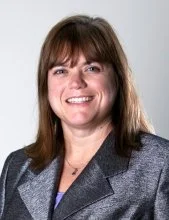
Michelle D. Smith, CPA, is a Partner in the Evansville office. She has nearly 30 years of experience in auditing with a concentration in not-for-profit and governments. Mrs. Smith obtained her Bachelor of Science degree in Accounting in 1991 from Ball State University. She joined Kemper CPA Group LLP in February 2008. She is a partner in the Evansville office and is a member of the firm’s Quality Control Committee. Michelle is a member of the AICPA and the Indiana CPA Society. She is on the Not-for-Profit Conference Planning Committee for the Indiana CPA Society. In addition, she serves as the treasurer for Chemo Buddies, on the Lilly Scholarship Committee and Community Good Grants Committee for the Warrick County Community Foundation, is a member of the Vanderburgh and Warrick Women's Funds, serving on both grants committees and is the current President of A Network of Evansville Women.